2,905,611 VISITORS VISIT 8,324,077 TIMES 3 TIMES EVERY DAY IN ONE YEAR. HIGHEST ACTIVITY IN WPCNR HISTORY.White PlainsCitizeNetReporter lifted its worldwide visits from unique visitors to wpcnr.com to 8,324,077,a 1,306,419 increase in visits in one year from 7,017,658 visits to the site last year which covers White Plains and Westchester County. The 8,324,077 visits were made by 2,005,611 unique visitors who visited wpcnr an average of 3 visits a day. ON JULY 20- -2026 visitors have accessed wpcnr and made 3,072 visits an average of 1.6 visits. In the last week 33,495 individual vistors made 54,458 visits, averaging 1.6 visits. In the last month, 152,940 visitors recorded 229,338 visits (1.5 visits)
The defendant is accused of telling the girl that he likes her and wants to kiss her.
WHITE PLAINS, N.Y. – Westchester County District Attorney Susan Cacace announced today that a coach for a White Plains-based youth soccer clinic was arrested Friday and charged with multiple offenses for allegedly kissing a 15-year-old girl and making suggestive comments to her.
Jose Grajales-Giraldo, 44, of Mamaroneck, was subsequently arraigned before White Plains City Court Judge John P. Collins Jr. on two counts of Endangering the Welfare of a Child, a class A misdemeanor, and two counts of Sexual Abuse in the Third Degree, a class B misdemeanor.
Grajales-Giraldo pleaded not guilty to the charges and was released on his own recognizance pending further proceedings. Judge Collins provided a temporary order of protection for the victim.
DA Cacace said:
“Protecting our young residents remains among my highest priorities as Westchester District Attorney. Our office treats offenses against children with the utmost seriousness. We are proud to take a proactive role in the community educating young people to recognize abusive and inappropriate conduct. We urge anyone with further information about this incident to contact our office.”
As alleged in the misdemeanor information, Grajales-Giraldo, a coach for a youth soccer clinic held at Rochambeau Alternative High School, in White Plains, approached a 15-year-old girl at the beginning of soccer practice on Jan. 25, 2025, and kissed her on the cheek. The information further alleges that Grajales-Giraldo kissed the girl again toward the end of practice.
On Feb. 1, the misdemeanor information alleges that Grajales-Giraldo approached the same girl and asked her if she is good at keeping secrets. He then told her, according to the information, that he really likes her and wants to kiss her.
Anyone with further knowledge about Grajales-Giraldo is urged to contact the Westchester District Attorney’s Office at (914) 995-TIPS (8477).
The investigation into this incident was conducted by the White Plains Police Department.
The case is being prosecuted by Assistant District Attorney Mollie O’Rourke of the Special Prosecutions Division.
WPCNR CAMPAIGN 2025.By Professor Stephen R. Rolandi February 12, 2025:
By way of comparison —
2021 General Election 2025 Special Election* SR 2025 forecast
Latimer/Jenkins (D) 103,608 62% 57,590 64% 55%
Sculti (R) 62,234 38% 32,956 36% 45%
*unofficial returns
Jenkins ran well in almost every part of the county. Turnout for this special election was remarkable — nearly 100,000 no doubt helped by the early voting option. In my view, the larger turnout increased Jenkins’ margin of victory.
Sculti ran a poor campaign, no TV interviews, no debates, etc.
Editor’s Note: Stephen R. Rolandi, a frequent contributor to WPCNR.com and White Plains Week published this article in a recent issue of American Society for Public Administration.
The views expressed are those of the author and do not necessarily reflect the views of ASPA as an organization.Republished here with permission of the author. (c) 2021, Stephen R. Rolandi By Stephen R. Rolandi
This being the month of February, many of us celebrate Ground Hog Day (February 2nd), hoping that spring will soon arrive, as well as Chinese (Lunar) New Year, on February 12th; and of course, Valentine’s Day on February 14th.
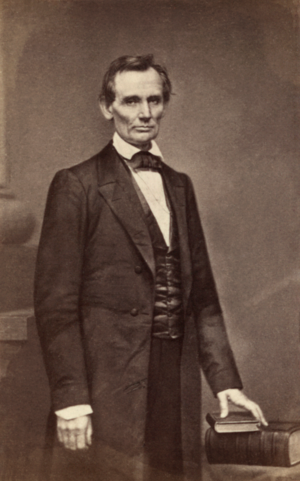
If you are like me and historically inclined, you might also mark February 12th as the birthday of our 16th American President, Abraham Lincoln (1809-1865). I have had a long and continuous admiration for our 16th President. I have travelled to Springfield, Illinois to see Lincoln’s law office and home. Many years ago, my late parents gave me a half dollar coin issued by the United States Mint in 1918 to commemorate the 100th anniversary of Illinois’ admission to the Union.
This year marks the 212th anniversary of Lincoln’s birth, and I believe it is a fitting time not only to examine his career as the nation’s Chief Executive during the bloodiest war in American history, but also his contributions to public service and impact on American public administration.
Lincoln was not popular in his time; indeed, he was elected in 1860 in a four way race with only 39% of the popular vote. He won re-election in 1864 with the Confederate states that had left the Union in 1861 not participating in that election; and with the support of Union soldiers who voted in overwhelming numbers for him. In addition to preserving the Federal Union during the Civil War, as well as his issuance of the Emancipation Proclamation, Lincoln had many accomplishments:
During his administration, the Federal departments of Agriculture and Veterans Affairs were begun, in an effort to assist farmers (the United States in the mid-19th century was to a large extent, an agricultural nation), as well as the nation’s veterans starting to return from the Civil War;
Recognizing the importance of education (Lincoln, you recall, had only about one year of formal education, and was largely self-taught and worked as an apprentice before becoming an attorney), the Morrill-Land Grant Act was signed into law to permit the establishment of land grant colleges to teach engineering, military tactics, science and other subjects;
Lincoln recognized that the increasing level of government services would require different funding streams, and during his administration, the Revenue Act of 1862 became law which also established the Office of the Commission of Internal Revenue within the Treasury Department—in time this would lead to the establishment of the progressive income tax system in the United States;
The first steps towards a national banking system and currency in the United States saw fruition with the passage of the National Banking Act of 1863;
He recognized the need to reform the Federal government civil service, and took the first steps in that direction with the 1863 evaluation of the French customs service which recommended competitive examinations. This led ultimately in 1883 with the passage of the Pendleton Act and establishment of the U.S. Civil Service Commission—today known as the Office of Personnel Management (OPM).
Taken together, along with other policy initiatives, many historians consider Lincoln’s Presidency to be the foundation of the modern administrative state. Indeed, it was Leonard D. White who said that,
“Administrative history was primarily the record of war and military government.” We can also see that many domestic and economic sector accomplishments occurred as an outgrowth of the war effort. Lincoln became a paradigm for future chief executives.
Perhaps for me his most important contribution was preserving the principles of constitutional government during a period of one of the gravest crises in American history. Lincoln was cognizant of relating his actions to the spirit and meaning of the Constitution. There are many, many works about Abraham Lincoln’s life, career and Presidency. More books about some aspect of him continue to be published. Some of my favorite books about the career and Presidency of Abraham Lincoln that I would recommend are the following:
Lewis E. Lehrman, “Lincoln at Peoria: The Turning Point” (2008)
Daniel Farber, “Lincoln’s Constitution” (2003)
Harold Holzer, “Lincoln As I Knew Him” (1999)
Ted Widmer, “Lincoln On the Verge: Thirteen Days to Washington” (2020)
Doris Kearns Goodwin, “Team of Rivals: The Political Genius of Abraham Lincoln” (2005)
If I had to recommend a single book on Lincoln, it would probably be Doris Kearn’s work on Lincoln, how he won the Republican party Presidential nomination against more prominent contenders, and how he led his cabinet—consisting nearly of all the Presidential contenders he faced in 1860—during the Civil War.
I should mention that Kearn’s work reportedly influenced Barack Obama when he assumed the Presidency in 2009. Lincoln’s experience as a war time chief executive gives us many perspectives, not only on the role of the executive in decision-making as well as leadership, but also for his lasting contributions towards the institution of the American Presidency and constitutional government.
He is, in my opinion, more relevant than ever today as we as a nation face the perfect storm of crises—the Covid-19 pandemic, a weakened national economy and a distinct threat to our democratic institutions and the rule of law. Happy Birthday, Mr. President!
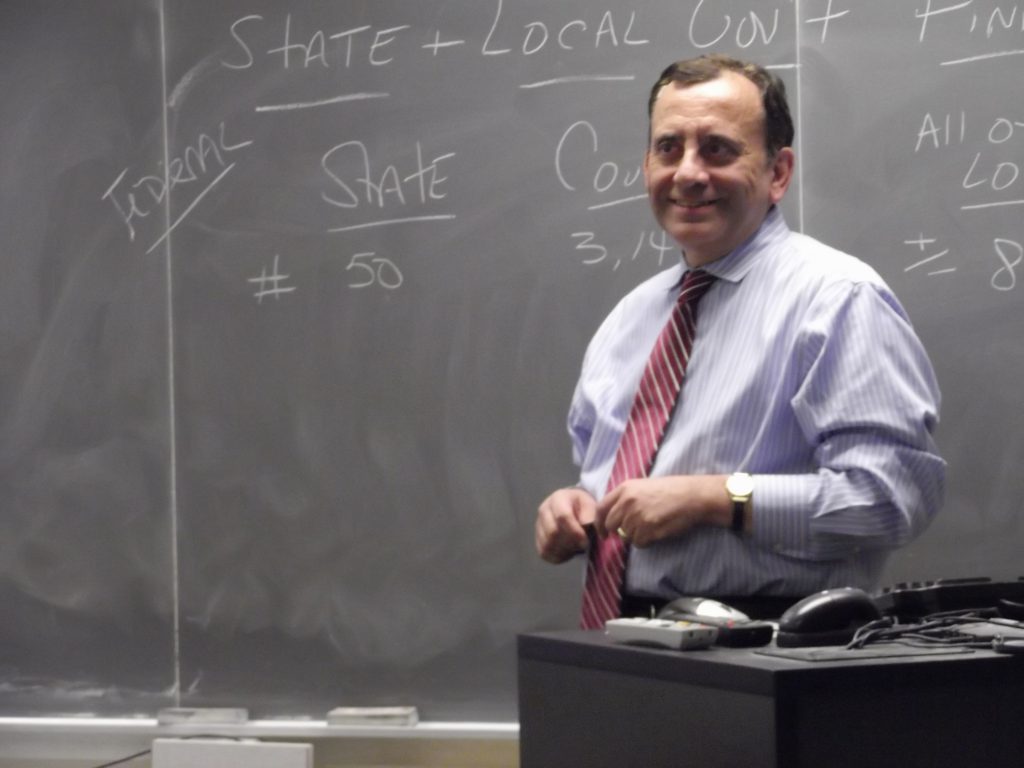
Author: Stephen R. Rolandi “retired” in 2015 after serving with the State and City of New York. He holds BA and MPA degrees from New York University, and studied law at Brooklyn Law School. He teaches public finance and management as an Adjunct Professor of Public Administration at John Jay College of Criminal Justice (CUNY) and Pace University. Professor Rolandi is a Trustee of NECoPA; President-emeritus of ASPA’s New York Metropolitan Chapter and was Senior National Council Representative. He has also served on many other association boards in New York City, Westchester County (New York State) and Washington, DC. You can reach him at: [email protected] or [email protected]