District Retirees Double Sick Pay Money on Departure. Buyouts Use 08/09 $$

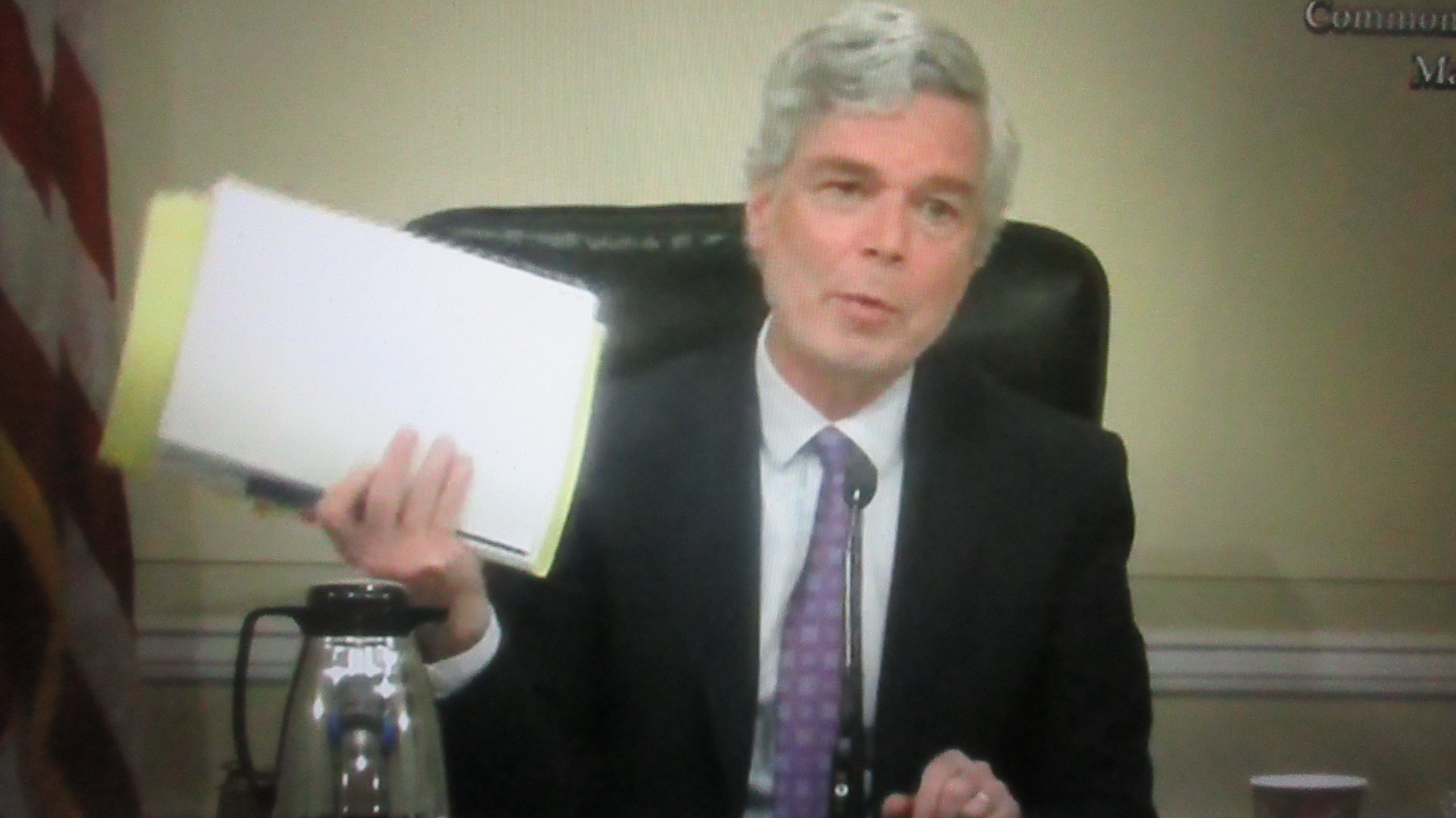
WPCNR SCHOOL DAYS. By John F. Bailey. April 30, 2009:  White Plains Administrators eligible to retire this year are being offered $25,000 substantially more than double their payment for unused sick days they would have received, as an incentive to retire by the School District.


Civil Service Employees Association members eligible to retire are being offered $10,000  incentives going forward  with the same generosity.


The incentive payments to clear the payroll of high salaried employees are being funded out of the current 2008-2009 salary line, Assistant Supertintendent for Business Fred Seiler told WPCNR Wednesday. The payments are cash incentives that replace payment for unused sick days.


Both the Administrators and Supervisors Association and the Civil Service Employees Association have approved the new “incentive” policy, eliminating payment for unused sick days in future years, “booking” the $25,000 and $10,000 payments as being out there for Administrators and CSEA employees to take with them into retirement. The$25,000 and $10,000 Retirement Incentives Policy was approved by the Board of Education Monday evening.


Seiler, asked what was the difference between unused sick day pay and the cash incentive payouts, said the maximum amount any administrator could be paid if they had not been sick in twenty years was approximately $12,500, meaning administrators opting to retire were getting double the maximum sick day payout as an “incentive” to retire.Seiler did not mention whether the CSEA employees were getting the same doubling effect. 


The Assistant Superintendent for Business said the district anticipates hiring replacement administrators for perhaps some $25,000 less in salary, if the administrators retiring (five are anticipated to accept the incentives)are replaced, realizing savings in the 2009-2010 budget. Seiler left open the possibility the administrators would not be replaced. He said that by offering the incentives the district could also avoid layoffs of teachers and teaching assistants next year.


Asked what the overall anticipated savings anticipated from the incentives, Seiler said it depended on whether or not the administrators were replaced and whether savings from CSEA personnel taking the $10,000 retirement incentives would be used to rehire other personnel, preventing layoffs. The district proposed 2009-10 budget anticipates the firings of about 50 persons, including 24 teachers and 20 teaching assistants. An estimated 58 layoffs including those 44 might be possible.


Dr. Leonora Boehlert, Assistant Superintendent for Human Resources, told WPCNR the $25,000 incentive for administrators to retire and the $10,000 incentive to ease CSEA members into retirement was not based on the number of unused sick days at all. She said the payments “were not pro-rated and not related to the number of sick days, only retirement eligibility.”


Boehlert, asked how many sick days per year administrators and district CSEA employees were entitled to, said in a statement, “Each contract has different amounts and calculations. The amounts are higher than the sick leave incentive for CSEA and administrators.”

Posted in Uncategorized

Field of 6 Contends for 3 School Board Seats


WPCNR SCHOOL DAYS. April 30,2009: Six candidates have filed petitions to contend for the three open seats on the White Plains Board of Education at the annual School Board Budget and  Board of Education election May 19.


The candidates are:


Peter Bassano, a local attorney ( a Board of Education Member since 2002). They are being contested by 


Jim Hricay, former Deputy Budget Director for White Plains, now with the City of Stamford  Budget Department.


Dr. Elsie Lahrmann, retired Director of Emergency Planning, Natural Medicine Practioner;


Reynolds Longfield, a former sales and marketing cosmetics executive, now an educator;


Donna McLaughlin, Board of Education President.


Augie Zicca, Jr. Westchester County Correction Officer (retired), IBN System Analyst (retired).

Posted in Uncategorized

Homeland Security Chief Update on H1N1 Virus

WPCNR HOMELAND SECURITY NEWS. News Briefing from Secretary of Homeland Security Janet Napolitano. April 30, 2009: This is the daily briefing to bring everybody up to speed on where things are with respect to the 2009 H1N1 virus. 

 We now have 10 states with confirmed incidents of H1N1—Arizona, California, Indiana, Kansas, Massachusetts, Michigan, Nevada, New York, Ohio, and Texas. We are likely to see more states, more cases, and some more hospitalizations over the coming days, and we are prepared for that.


 As you know, and I’m sad today to report, that today we had our first confirmed death as a result of the H1N1 virus in the United States. It was a 23-month-old child, and our sympathies go out to her family out of this. But as I said and have been saying, this is a flu, and a flu cycle. We think we’re at the beginning of a flu cycle, which typically brings with it some severe illness and death. Indeed, in the normal seasonal flu cycle, we will have about 36,000 deaths in the United States. That’s a fact that surprises many. But it is part and parcel of an influenza cycle. So our thoughts are with those who have contracted the virus now, and of course for the family of the child who died.


 Every American should know that we are aggressively responding to this outbreak. Antiviral medications are en route to states to supplement their own stockpiles. Indiana, New York, New York City, already have their allocations. Several other states will receive their allocations by today. And all states will receive theirs no later than the third of May.


 Let me point out an important difference here. There’s been some confusion between antiviral and vaccine. A vaccine is administered to prevent the flu from occurring. An antiviral is occurred after you get sick to mitigate the symptoms so that you feel better. So it is the antiviral stockpile that I’m referring to now.


 We’re also actively monitoring travelers at our land, sea, and air ports. We’re watching them for signs of illness, and we have appropriate protocols in place to deal with those who are sick. Precautions are being taken to protect travelers and border personnel. Anyone exhibiting symptoms is being referred to an isolation room where they can be evaluated by a public health official before proceeding to their destruction.


 I know there have been some calls to close the border. I want to address that directly. First of all, it is important to know that we are making all of our decisions based on the science and the epidemiology as recommended to us by the Centers for Disease Control. The CDC, the public health community, and the World Health Organization [WHO] all have said that closing our nation’s borders is not merited here, that the focus, the public health focus, should be on mitigating the impact of this virus. And so we are following those recommendations now. 


 As I said, we continue to actively monitor those coming across the borders and at our airports, as we’ve been doing all week. And we are also distributing flyers and public health information to individuals. As of today, Customs and Border Protection has referred a total of 49 suspected cases to the CDC or state and local officials. All the results have been negative, except the eight that are still under study.


 I know that in addition to travelers, many parents across the country are concerned about school closures, and President Obama spoke about this earlier today. The Centers for Disease Control has recommended that schools with confirmed cases of H1N1 virus or schools with suspected cases linked to a confirmed case consider closing on a temporary basis. Some schools have already followed that advice. The best thing parents can do right now is to make sure you have a contingency plan in place so that you’ve made arrangements to care for your child in the event of a school closure.


This is also a good reminder for businesses to think about contingency planning as well.  As I said, we’re going to be working through this for a while. You have to anticipate what happens if you have employees who are parents. The schools have closed. The employees need to stay home. How do you continue with your business operations? And so all of us should be dusting off our business contingency plans, looking at things such as telecommuting and the like so that operations keep on going.


 And of course, we advise anyone with flu symptoms to stay home or consult a doctor if you have severe symptoms. This is a problem that every individual can help us with by adopting common sense solutions or precautions. Cover your mouth or nose when you sneeze. Don’t go to work or school or go on a plane or a bus if you are sick so that you don’t communicate the disease to others. And wash your hands often.


Posted in Uncategorized

School Admintr Retire Offer–$25,000 Incentive; CSEA $10,000. Cume Sick Days Out


WPCNR SCHOOL DAYS. By John F. Bailey. April 29, 2009: Dr. Lenora Boehlert, School District Assistant Superintendent for Human Resources, reported to WPCNR the details of new retirement incentives the school district is offering to members of the Administrators and Supervisors Association and Civil Service Employees Association, approved Monday evening.


Boehlert said the Retirement Incentives eliminated payment for accumulated sick days not used on retirement, and instead offered administrators one flat payment of $25,000 (as incentive to retirement) and a flat payment of $10,000 to CSEA employees.


Boehlert said as people retire, the district has the option to not fill those positions, enabling the district to avoid the laying off of  positions such as teaching assistants.  Savings might also be achieved in the2009-2010 budget by the district choosing not to fill administrator positions or if the positions were considered essential, to fill them with persons at a lower salary.


Boelert expects 5 Administrators and 11 to 15 CSEA employees to take advantage of the Retirement Incentives, at a WPCNR estimated total payout of about $275,000 total. A call is in to Fred Seiler, Assistant Supertintendent for Business to ascertain how the incentives are being funded.


Dr. Boehlert said the two unions had approved the new policy of flat payments instead of accumulated sick day payments.

Posted in Uncategorized