City $$$ Off $7.5M; Expenditures Up $3M = 24% Increase in Taxes if No Cuts

WPCNR Quill & Eyeshade. By John F. Bailey. January 28, 2010: The city’s revenues are $7.5 Million off while expenitures are up $3 Million due to the police and fire arbitration award. This sets the stage for a combination of department budget cuts, possible new revenue raising fee increases by some departments, a bigger-than-usual tax increase in the 2010-11 budget. The city also has no undesignated fund balance to cover shortfalls next year, if the allowed fund balance  is used this year.


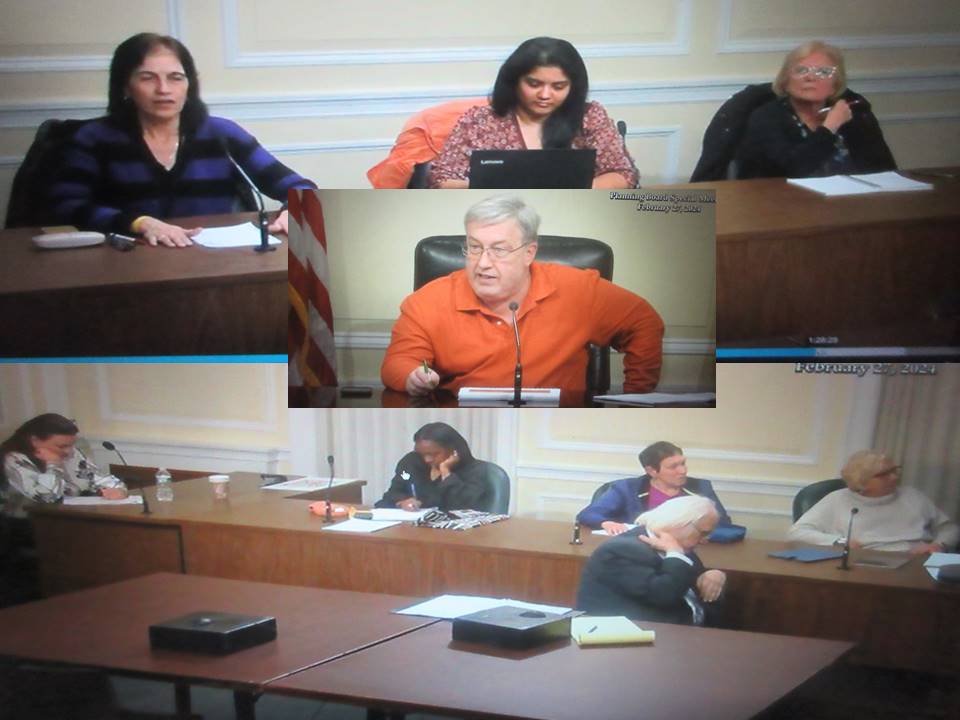
The Mayor’s Budget  & Management Committee chaired by Councilwoman Beth Smayda learned this its first meeting of the new administration Wednesday evening and learned from consultant Eileen (Earl)Bradley, the former Budget Director who resigned in 2002 in the Delfino Administration, that the city’s revenues are down $7,418,315. Expenditures due to the recently arbitration awards to the police and firefighters, are up $2,969,185.


 Ms.Bradley  presented a runthrough projecting that to make up the revenue shortfall alone in the 2010-11 budget, the city would need to increase property taxes 23.49%, an increase of the tax rate from the present $157.06 per $1,000 of assessed valuation to $193.96/assessed valuation ($36.90 increase).


This is in line with White Plains Week and WPCNR projections made weeks ago. Such a increase described hyptothetically by Ms. Bradley Wednesday night,  would make your property tax on a $650,000 assessed (median) home in White Plains go from $2,901 to $3,583, a $682 increase, with a whopper school tax increase to come if the assessment roll takes another expected plunge of  $3 Million.   Bradley emphasized these were projections.


Adding to city woes, Lloyd Tasch, the City Assessor told WPCNR Wednesday there were 1,154 assessment challenges submitted last week, with good more than half from city homeowners. He said it was too early to say whether his prediction of a  $3 Million drop in the assessment roll might rise. The roll is due March 1st.


Over on the other side of town Monday evening, Assistant Superintendent for Business Fred Seiler of the City School District,  when the Operations Budget of the School District was unveiled at last year’s level ($80 Million), that any shortfall in revenues occurring in the school district due to lost state aid and a lower assessment roll would be met by an increase in the property tax. The District goal is to keep spending at this year’s level of $186 Million.


Eileen Earl Bradley’s Revenue Projections


The City is Not Contemplating a 23% Tax Increase.


Ms. Bradley emphasized the administration does not plan to make up the entire revenue gap with a tax increase, because it has given all departments a number figure of how much each department would have to cut from their budgets.


The figure given each department,  Ms. Bradley said was not a percentage, but based on the size of department expenditures


The Departmental budgets would be submitted to the Mayor’s Office. The Budget and Management Committee would be shown what the Mayor’s office has approved in the budgets submitted.


Committee to suggest not shape.


The Committee would be able to make suggestions on the budget only after the budget had been completed by the Mayor’s staff and budget team, the new Commissioner of Finance Michael Genito said in presenting the responsibilities to the new committee.


Ms. Bradley said Mayor Adam Bradley has already determined cuts previous to the departments submitting their budget requests (due February 15), which the Mayor would present to the Common Council for their approval February 1. Those cuts were not explained to the Budget and Management Committee, and none of them asked what they were.


Doing a Little Checkin


Mr. Genito said the great drop in the sales tax receipts in December is being looked into by the city. He and Ms. Bradley agreed that generally the December figure adjusts the estimates of the previous two months  and is a “real number,” so they are very hopeful that several retailers simply filed their checks late and that perhaps the 1.3 Million drop in the December figures would show up in January. They are exploring this quietly with the Department of Taxation and Finance. The sales tax collection for December, $3,024,009,Genito confirmed was the worst since 2000-2001.


It should be pointed out though, that Ms. Bradley’s projection assumes the sales tax hits $45 Million,  she told me. At the current steady 11% decline the city is showing through the first six months of the year, this projects if continued a $42 Million sales tax, not $45 Million.


Revenue under-performers are lead by the sales tax (down$2,350,000), Taxi medallions of which none have been sold to date, ($1.2 Million); Mortgage Tax ($800,000).


Fund Balance Problem


Bradley highlighted another problem, if the present undesignated fund balance is used to fund this year’s shortfall, there will be no fund balance  to allocate for 2010-11. The idea Mayor Adam Bradley has explored with County Legislator Peter Harckham to raise sales tax an undetermined amount to replenish fund balance would go a ways to solving that problem. Mr. Bradley has not yet responded to a WPCNR e-mail as to the details of how the new Mayor sees this working to replenish the missing fund balance.


Tim Sheehan, a member of the committee, after the sales tax discussion said that the city right now had to take drastic action with the unions (police and fire union contracts beginning in 2010-11, have to begin negotiations soon) and demand wage cuts in exchange for preserving jobs, or continuing raises with the understanding there would be layoffs, a policy Harrison pursued.


The Committee said they wanted the city to explore health cost sharing for the future, consolidating services, water rates.


Ms. Bradley emphasized that any concessions in health costs with the unions would only affect years way down the road and that getting the city out of this present budget crisis would take several years, a return to sound conservative practices, and reduction in the labor force.


The committee also suggested a citywide manpower analysis. Ms. Bradley said she would have to think about that because it was a tremendous undertaking.


Mayor Bradley made a brief appearance at the beginning of the meeting, thanking the members for their participation and saying how important the committee was, then left the meeting.

Posted in Uncategorized

Harckham Confirms: Bradley Sales Tax to Replenish Fund Balance. 3 Endorsements


WPCNR BACKROOM BULLETIN. By John F. Bailey. January 27, 2010: Peter Harckham, the Democrat  the County Legislator from Katonah-Lewisboro, running in the Special Election February 9 against Robert Castelli, the Republican, Conservative and Independent line candidate, told WPCNR he would support Mayor Adam Bradley’s “plan in the making”  to use a new hike (as yet undisclosed) in the White Plains sales tax dedicated solely to “restore” the city’s reported depleted fund balance. Such an increase would have to be passed by both houses of the state legislature, requiring either Assemblywoman Amy Paulin’s, or the 89th Assembly electee support.


Harckham also said he would fight for restoration of White Plains School District aid (presently projected to be cut $2.4 Million in the Governor’s new Executive Budget)/ Harckham told WPCNR the formula for determining school aid needs to be reconfigured and that if elected and  he would attempt to restructure the school state aid formula which he said in current form does not provide enough share of aid to wealthier districts such as White Plains.


Peter Harckham, Monday, receiving endorsements of Congresswoman Nita Lowey, to his right, and Congressman John Hall, to Mr. Harckham’s right.


Asked if he would be willing to sponsor a sales tax increase in White Plains solely dedicated to “replenishing” White Plains unallocated fund balance that has been depleted to about $5 Million going in to the 2010-2011 Budget,  Harckham said his job was to represent White Plains and our interests and said he had already had two meetings with Mayor Adam Bradley discussing the plan to increase the sales tax, currently 8-1/8% of which 2-1/4% goes to the city .


WPCNR asked Harckham how he would attack the property tax situation strangling White Plains homeowners. He said the Adam Bradley sponsored separate commercial tax rate bill designed to halt the certiorari assault by businesses in Westchester County that was  indignantly fought and killed by the Westchester business community with a propaganda barrage last spring, and its unknown possible affect on businesses was not the answer at the time.  


Instead Harckham said the answer to trimming property tax was consolidating state government departments, eliminating duplication of services, trimming expenses on a grand scale.


In Harckham’s comments in a brief address he said:  “to balance the budget on the state level we all  know we’re going to have to need to make cuts in existing systems and shared sacrifices, but the proposedcuts in education funding are not shared and not fair. The budget calls for a 5% cut in state education aid, but the White Plains is looking at a 14% cut. That’s neither fair, nor shared…the way to finally balance the budget once and for all is to finally address the growth the administrative side of the state government by streamlining and consolidating the more than 1,000 departments, agencies and state bonding authorities.”


Bradley floated the sales tax increase idea, to dedicate funds from any new percentage to building up the city fund balance exclusively in a Cablevision interview program two weeks after he was elected on “Meet the Leaders.”


Mayor Bradley was asked in an e-mail late Tuesday evening to explain how he sees this plan working, perhaps this evening at the Budget and Management Committee meeting, he will shed more light on this plan. Mr. Bradley refused to go for an additional quarter per cent sales tax to bring in more revenue in 2009 when requested by former Mayor Joseph Delfino in 2008, to counter rising city expenses, though Mr. Bradley did sponsor a half of what the Delfino Administration requested, (1/4%) which passed to aid the2008-2009 budget. A similar request by the Delfino administration for the 2009-10 budget, was not endorsed by Mr. Bradley during this time last year.


Mr. Harckham confirmed discussions with Mr.Bradley on the new sales tax/fund balance restoration increase tactic after a news conference in which he was endorsed for the 89th District Assembly seat (formerly held by Adam Bradley) by Congresswoman Nita Lowey and Congressman John Hall who said that Mr. Harckham had the ability to work with people of different sides and to seek out solutions. Hall said he was the right man to reform Albany and change the way things are done.


Tim Idoni, County Clerk, kicked things off, calling Mr. Harckham  “ an agent for change, Peter has the initiative, ability to take on issues, ability to move into a job quickly and get it done.”


Congressman John Hall said, “It is possible even when you’re new to get things done, (referring to his own efforts in the house successful in new improvements for veterans). With the energy and focus I’ve seen Peter bring to his job at the county level, (his) A new voice, new ideas and new energy are what’s called for especially in times like this when budgets are tight,  there seems gridlock everywhere. Peter has shown he is someone who can work with Democrats and Republicans of the county legislature  who are in attendance, focusing more on the ideas and the issues more than personalities and the parties. Whether its protecting local water quality, creating affordable housing, advocating fiscal discipline and Peter’s already been doing that,n  and now he can bring that voice to Albany.”


Congresswoman Nita Lowey said: “He has been a dedicated, responsive, attendant  voice to the people of my district on the Board of Legislators… What’s very important about Pete is he knows how to reach across party lines. He listens with respect to opposing points of view, and then he knows how to force questions for action. Many people can talk to people but  to change the way legislation is done and make sure you get something done is another. That’s what the people of Westchester deserve and expect in their state representive. Pete has never been about politics, it’s about good old-fashioned values, get a good job done and  making a positive difference for the people he represents.”


Today, Wednesday, Naomi Matusow, former Assemblywoman of the 89th District who was ousted by Adam Bradley in a hotly contested Democratic Primary in 2003 (Mr. Bradley won by 23 absentee ballot votes), endorsed Mr. Harckham, releasing a statement to the media:


“ With Pete’s election, the residents of the entire 89th Assembly District  will have chosen the one person in this race who will best understand and represent the interests of the semi-rural and rural communities in the District, while being able to balance the needs of all the suburban and urban communities from south to north.”


Cigar Smoke…


Lowey: Stimulus Money to Rescue N.Y. From Its 2010-11 Deficit, Fund Tappan Zee UP TO THE U.S. SENATE


After her comments endorsing Mr. Harckham, Nita Lowey told WPCNR that the $150 Billion Jobs Stimulus Plan passed by the House of Representatives could possibly be used to aid New York State in meeting its budget gap in the 2010-11 as well as funds for the Tappan Zee Bridge reconstruction. She said though that that bill still had to pass the United States Senate. The house passed that $150 Billion bill by  217 to 212.


Posted in Uncategorized

Governor Paterson: NY Faces a Winter of Reckoning

WPCNR ALBANY ROUNDS. By Governor David Paterson. From Governor David Paterson’s Press Office. January 26,2010: 


This is our winter of reckoning.

The mistakes of the past — squandering surpluses, papering over deficits, relying on irresponsible fiscal gimmicks to finance unsustainable spending increases — have led us to a financial breaking point. We have to accept that the old way of doing budgets is unsustainable… and I need your help getting Albany to understand that.


New York Times

Gov. David Paterson of New York presented a lean budget on Tuesday that is a necessarily austere response to the state’s financial crisis… Mr. Paterson’s budget makes sense and, for the most part, asks for shared sacrifice. That is a reasonable approach even though this is an election year, when reason does not routinely prevail. The governor has set himself a difficult but necessary task. Read more…

— Editorial, 1/6/2010

Last week, I submitted my Executive Budget that continues the difficult process of confronting New York’s new fiscal reality. While all states have been hit hard by this Great Recession, New York once again finds itself at the epicenter of a monumental national challenge being the home to our country’s financial community. As a result, my budget makes painful, but responsible, spending reductions in order to eliminate a $7.4 billion deficit.

Just as New York families have had to make tough spending choices to make ends meet, so must state government. Passing along these problems to future administrations is not an option for me. As I told legislators during my
State of the State address, I will no longer allow New York to be run like a payday loan operation, and I refuse to write bad checks or mortgage our children’s future instead of responsibly confronting our challenges.

Our budget not only limits spending to far below the rate of inflation, but is also anchored to the most significant public higher education reforms in a generation, provides fiscal relief to local governments through an aggressive mandate reform agenda, and includes a number of critical long-term reforms that lay the groundwork for changing the way our State government does business.

Nobody wants to make these cuts. They are painful, they are difficult, and they will have a real impact on people’s lives. But delaying action will not only make the problem worse, it will make it harder to solve in the future.


The Buffalo News

It was an appropriately hard-nosed budget speech that Gov. David A. Paterson delivered to lawmakers and others on Tuesday. Time and again, Paterson put his finger on the financial problems that New York’s routine recklessness has caused the state. Now comes the reckoning. Read more…

— Editorial, 1/19/2010

That’s why I need you to join me in this fight to change the way Albany does business. We need to make sure your voice is heard so that we can level the playing field and end the dominance of the special interests. Please add your name now by clicking here to let me know that you want to put government back on the side of hardworking New Yorkers.

I know New Yorkers are tired of leaders who pass the buck, force others to make the tough choices to keep their poll numbers artificially high so that they might stay in office, or who unethically game the system for personal political ambition. The budget I submitted is a blueprint for a stronger, healthier, more fiscally and ethically responsible New York. The only way we can emerge from this crisis is through shared sacrifice and changing the way Albany does business, and doing so with honesty, forthrightness, and candor. That is exactly what New Yorkers expect and deserve from their leaders.

Sincerely,
David A. Paterson
Governor of New York

Posted in Uncategorized

County Executive Astorino Says Paterson Spending Cuts Shift Burden to Westcheste

WPCNR COUNTY CLARION-LEDGER. From Ed McCormick, Westchester County Department of Communications. January 20, 2010 (Edited): County Executive Robert P. Astorino today criticized the state budget proposed by Gov. Paterson, saying it would shift costs to local taxpayers instead of cutting state spending.


“The fiscal picture that the Governor portrays is not dissimilar to what we see on the county and municipal level: looming deficits and shrinking revenues,” said Astorino. “Unfortunately, Gov. Paterson’s plan is off target. More taxes are not the answer. He should be attacking spending, not shifting costs to counties, local governments and school districts. Our taxpayers can not bear this extra burden.”


Astorino added: “Costs for health care and retirement benefits –  for all levels of government – continue to soar. And while the state has made an effort to address the pension issue for new employees, the only way to impact the bottom line of the budget is to cut costs, not pass on costs to our taxpayers.”


The county executive also expressed his strong opposition to the governor’s proposal to add a tax on soda with sugar, saying this would hurt both Purchase-based PepsiCo and Somers-based Pepsi Bottling Group, two of the region’s largest employers.


 “The focus needs to be on economic growth and job creation,” he said. “Increasing taxes will have just the opposite effect.”


 The county’s budget department is currently undertaking an in-depth analysis of the proposed state budget.


What follows are some issues already apparent:


·        The county anticipates a $3.6 million reduction in State Transportation Operating Assistance (STOA), which offsets the Bee-Line operating expenses; and $240,000 less for the cost of the county’s parkway patrols.


·        Preliminary analysis also shows a proposed reduction of $800,000 in state aid for the Health Department’s Children with Special Needs program and $1.5 million in other possible health department cuts.  (In the case of the Children with Special Needs program, there would be some new revenue by charging fees to parents.)


·        The budget cuts aid to local government and school districts, thereby placing additional pressure on the local tax levy for the residents of Westchester County.


Astorino applauded some of Gov. Paterson’s initiatives and encouraged lawmakers in Albany to support their final adoption. They included:


·        The proposal to repeal Wicks Law, which will help in containing the cost of capital projects for school districts


·        The proposal to enable local governments to hold reverse auctions, in which vendors bid against each other for lower prices


·        The proposal to limit county expenses for preschool education


·        The proposal to provide rate relief to the New York State Health Insurance program by limiting premiums paid by local governments


·        The proposal to allow judges to replace personal appearances by defendants by using video conferences when the circumstances are appropriate


·        The proposals to allow shared justice court facilities, and directors of weights and measures.


Posted in Uncategorized