REMOTE WORK FROM HOME DAY 32 WPCNR DEGREES SNOWING WIND FROM NW 12 MPH AT 8:30 A.M.

Hits: 265


SHOVELING WARNING: THE SNOWFALL AS OF 8:30 A.M. 5 INCHES, BUT IT IS A HEAVY WET SNOW, HARD TO SHOVEL. BEWARE OF OVERDOING IT. 

Today
Snow, mainly before 1pm. The snow could be heavy at times. High near 35. Wind chill values between 20 and 25. Northwest wind 11 to 15 mph, with gusts as high as 25 mph. Chance of precipitation is 100%. Total daytime snow accumulation of 5 to 9 inches possible.
Tonight
Mostly clear, with a low around 26. Wind chill values between 15 and 20. West wind 8 to 13 mph.


Posted in Uncategorized

THE WHITE NIGHT BEGINS.

Hits: 230

SNOWY NIGHT: Blowing snow started at 2:30 A.M. Tuesday morning and by  4 A.M. above  It was accumulating on yards, cars and roofs. 

SILENT PINES OBSERVE THE BLOWY DRIFTING SNOW, RECALLING HENRY WADSWORTH LONGFELLOW’S POEM.

NATIONAL WEATHER SERVICE FORECAST AS OF 4:30 A.M. 31 DEGREES, SNOW. WIND NORTH AT 4.

Tuesday
Snow, mainly before 1pm. The snow could be heavy at times. High near 35. Wind chill values between 20 and 25. Northeast wind 11 to 15 mph becoming northwest in the afternoon. Chance of precipitation is 100%. New snow accumulation of 5 to 9 inches possible.
Tuesday Night
Mostly clear, with a low around 26. Wind chill values between 15 and 20. West wind 8 to 13 mph.
Posted in Uncategorized

ABRAHAM LINCOLN AND HIS LEGACY TO AMERICAN PUBLIC ADMINISTRATION

Hits: 247

Abraham Lincoln 1860. By Matthew Brady
Editor’s NoteStephen R. Rolandi, a frequent contributor to WPCNR.com and White Plains Week published this article in a recent issue of American Society for Public Administration. The views expressed are those of the author and do not necessarily reflect the views of ASPA as an organization. Republished here with permission of the author. (c) 2021, Stephen R. Rolandi By Stephen R. Rolandi This being the month of February, many of us celebrate Ground Hog Day (February 2nd), hoping that spring will soon arrive, as well as Chinese (Lunar) New Year, the Year of the Ox, on February 12th; and of course, Valentine’s Day on February 14th. If you are like me and historically inclined, you might also mark February 12th as the birthday of our 16th American President, Abraham Lincoln (1809-1865). I have had a long and continuous admiration for our 16th President. I have travelled to Springfield, Illinois to see Lincoln’s law office and home. Many years ago, my late parents gave me a half dollar coin issued by the United States Mint in 1918 to commemorate the 100th anniversary of Illinois’ admission to the Union. This year marks the 212th anniversary of Lincoln’s birth, and I believe it is a fitting time not only to examine his career as the nation’s Chief Executive during the bloodiest war in American history, but also his contributions to public service and impact on American public administration. Lincoln was not popular in his time; indeed, he was elected in 1860 in a four way race with only 39% of the popular vote. He won re-election in 1864 with the Confederate states that had left the Union in 1861 not participating in that election; and with the support of Union soldiers who voted in overwhelming numbers for him. In addition to preserving the Federal Union during the Civil War, as well as his issuance of the Emancipation Proclamation, Lincoln had many accomplishments:
  • During his administration, the Federal departments of Agriculture and Veterans Affairs were begun, in an effort to assist farmers (the United States in the mid-19th century was to a large extent, an agricultural nation), as well as the nation’s veterans starting to return from the Civil War;
  • Recognizing the importance of education (Lincoln, you recall, had only about one year of formal education, and was largely self-taught and worked as an apprentice before becoming an attorney), the Morrill-Land Grant Act was signed into law to permit the establishment of land grant colleges to teach engineering, military tactics, science and other subjects;
  • Lincoln recognized that the increasing level of government services would require different funding streams, and during his administration, the Revenue Act of 1862 became law which also established the Office of the Commission of Internal Revenue within the Treasury Department—in time this would lead to the establishment of the progressive income tax system in the United States;
  • The first steps towards a national banking system and currency in the United States saw fruition with the passage of the National Banking Act of 1863;
  • He recognized the need to reform the Federal government civil service, and took the first steps in that direction with the 1863 evaluation of the French customs service which recommended competitive examinations. This led ultimately in 1883 with the passage of the Pendleton Act and establishment of the U.S. Civil Service Commission—today known as the Office of Personnel Management (OPM).
Taken together, along with other policy initiatives, many historians consider Lincoln’s Presidency to be the foundation of the modern administrative state. Indeed, it was Leonard D. White who said that, “Administrative history was primarily the record of war and military government.” We can also see that many domestic and economic sector accomplishments occurred as an outgrowth of the war effort. Lincoln became a paradigm for future chief executives. Perhaps for me his most important contribution was preserving the principles of constitutional government during a period of one of the gravest crises in American history. Lincoln was cognizant of relating his actions to the spirit and meaning of the Constitution. There are many, many works about Abraham Lincoln’s life, career and Presidency. More books about some aspect of him continue to be published. Some of my favorite books about the career and Presidency of Abraham Lincoln that I would recommend are the following:
  • Lewis E. Lehrman, “Lincoln at Peoria: The Turning Point” (2008)
  • Daniel Farber, “Lincoln’s Constitution” (2003)
  • Harold Holzer, “Lincoln As I Knew Him” (1999)
  • Ted Widmer, “Lincoln On the Verge: Thirteen Days to Washington” (2020)
  • Doris Kearns Goodwin, “Team of Rivals: The Political Genius of Abraham Lincoln” (2005)
If I had to recommend a single book on Lincoln, it would probably be Doris Kearn’s work on Lincoln, how he won the Republican party Presidential nomination against more prominent contenders, and how he led his cabinet—consisting nearly of all the Presidential contenders he faced in 1860—during the Civil War. I should mention that Kearn’s work reportedly influenced Barack Obama when he assumed the Presidency in 2009. Lincoln’s experience as a war time chief executive gives us many perspectives, not only on the role of the executive in decision-making as well as leadership, but also for his lasting contributions towards the institution of the American Presidency and constitutional government. He is, in my opinion, more relevant than ever today as we as a nation face the perfect storm of crises—the Covid-19 pandemic, a weakened national economy and a distinct threat to our democratic institutions and the rule of law. Happy Birthday, Mr. President!
Author: Stephen R. Rolandi “retired” in 2015 after serving with the State and City of New York. He holds BA and MPA degrees from New York University, and studied law at Brooklyn Law School. He teaches public finance and management as an Adjunct Professor of Public Administration at John Jay College of Criminal Justice (CUNY) and Pace University. Professor Rolandi is a Trustee of NECoPA; President-emeritus of ASPA’s New York Metropolitan Chapter and was Senior National Council Representative. He has also served on many other association boards in New York City, Westchester County (New York State) and Washington, DC. You can reach him at: srolandi@jjay.cuny.edu or srolandi@pace.edu or at 914.536.5942.
Posted in Uncategorized

TRICIA LINDSAY OF YONKERS CHALLENGES SHELLEY MAYER FOR THE STATE SENATE

Hits: 509

The Tricia Lindsay Campaign for New York State Senate 37th District released its announcement video “Together We Rise,’ today declaring her candidacy challenging  Senator Shelley Mayer, the incumbent. Ms. Lindsay said:

“Together We Rise. Together, we empower, and together, we shape a brighter future for all. Let us rise together. We, the people. Stronger. More united. More determined than ever before. I am Tricia Lindsay running for New York State Senate, advocating for justice, empowering communities, and shaping a brighter future for all.”

Tricia Lindsay is a  former schoolteacher and administrator of 24 years in the New York City and Yonkers Public School Districts, Ms. Lindsay worked ardently to improve the lives of her students. Always passionate about everything she does, recognizing gross injustices throughout the pandemic in the educational, health, and religious sectors.

Ms. Lindsay was a vocal proponent of the people, speaking on various platforms throughout the United States of America, educating the masses on the Constitution and citing constitutional law to defend multiple persons whose rights had been violated by the government and corporate overreach.

She observed the resilience and strength of We The People.

She also made note of the challenges we face with the targeting of our children, the attack on the family and the erosion of parental rights, the increase in the cost of living, the growing immigration problem to the detriment of our country, and the invasion into every area of our lives through the assault on our Constitution.


Posted in Uncategorized

ONLINE HARASSMENT RATES TWICE AS HIGH AMONG DATING-APP USE, Information Removal Service Finds

Hits: 1219

WPCNR INTERNET WATCH. From Incogni Research. February 12, 2024:
In an era where online interactions increasingly shape our social lives, the occurrence of online harassment poses a significant threat to the safety and well-being of individuals, particularly those engaging in online dating.
Incogni’s researchers have found that almost a fifth of Americans (19%) have experienced online harassment, while people currently dating online experienced it almost twice as often (36%).
A significant portion of Americans (37%) claim to know what of their personal data is available online, with a majority also recognizing the link between exposed data and the potential for online harassment.
The consequences of online harassment extend far beyond the digital realm, affecting the mental and emotional health of victims.
Anxiety, depression, and a sense of vulnerability are just some of the devastating consequences experienced by those subjected to online abuse. Moreover, extreme forms of harassment, such as swatting, can escalate situations to life-threatening levels, highlighting the critical nature of this issue.
Incogni, data privacy company, conducted a survey to determine Americans’ experiences with online harassment and their usage of dating apps. The researchers analyzed the data collection and sharing practices of some of the most well-known dating apps currently available.
It was found that among the 19% of respondents who had experienced at least one form of cyber abuse, cyberbullying, hate speech, and trolling were the most common manifestations.
Women were disproportionately affected by sexual harassment, online impersonation, and cyberstalking. 
A significant number of Americans (37%) are aware of the availability of their personal data online, with a majority understanding the connection between data exposure and the occurrence of online abuse or harassment.
Among Americans who use dating apps, 36% have reported experiencing online abuse, with cyberbullying and hate speech being the most prevalent forms of harassment. This number is almost twice as high compared to the general population.
Researchers then focused on popular dating apps, including Facebook, Bumble, Hinge, Plenty of Fish, and Coffee Meets Bagel. Some concerning data-collection practices and security incidents were revealed. These platforms collect sensitive information such as sexual orientation, information on race and ethnicity, and political beliefs, and many have also experienced data breaches, leading to the unauthorized exposure of user data, including photos. 
It’s important to consider factors such as the data collection and sharing practices of such apps, as apps that collect large amounts of user data may inadvertently heighten the risk of security breaches and, in turn, incidents of harassment. Dating apps require users to disclose personal information, ranging from basic demographics to more intimate details such as sexual orientation and preferences. While certain information may be essential for the functionality of these platforms, users should exercise discretion when sharing optional data and interacting with unknown individuals while using these apps.
“Incogni calls upon dating-app developers to prioritize user security and privacy by introducing effective data-protection measures and contributing to a culture of accountability. Additionally, we urge users to remain cautious, stay informed of the risks associated with online interactions or when sharing personal information and report instances of harassment. Together, we can work towards creating safer and more inclusive digital environments where individuals can connect and build meaningful relationships without fear of harassment or violence,” – underlines Darius Belejevas, Head of Incogni.
The survey was conducted using the Cint platform. The research team surveyed a nationally representative sample of 1,008 adults residing in the United States. The quotas on age, gender, and place of residence are based on US demographic data. The most well-known dating apps were recognized based on a ranking by Forbes. The research team then collected information about these apps from the Google Play Store, noting what user information the selected apps collected and shared and for what purposes. 
 
The full text of the study and images are available here: study
The data used in this study is available here: public dataset.
 
Posted in Uncategorized

The Rolandi Forecast on the Suozzi-Pilip Race Special Election to Replace George Santos.

Hits: 212

WPCNR CAMPAIGN 2024: By Professor Stephen S. Rolandi. February 12, 2024:

The special election to choose the candidate who will complete the balance of disgraced former Representative George Santos’ term will be held on Tuesday, February 13, 2024. This election pits former Nassau County Executive/U.S. Representative Tom Suozzi (D) against first time Congressional candidate Mazi Pilip, a Democrat running on the Republican-Conservative lines.

Over $ 20 million has been spent by both candidates in a race with national implications. Suozzi has run the better race, aided by key endorsements. Pilip will no doubt be helped by the border security/immigration issue, while Suozzi will be helped by voters favoring reproductive freedom/pro-choice. 

Pilip did not campaign this weekend, a strategic error in my view.

In a low turnout that will likely see a major winter storm on Election Day, my call is: SUOZZI 51%, PILIP 49%

Do not be surprised to see both candidates square off again in the fall for the regular two-year term commencing January 2025.


Posted in Uncategorized

BASEBALL’S BACK! HOT STOVE LEAGUE FROM AL LANG FIELD, ST. PETERSBURG FLORIDA with LINDSEY NELSON AND WPTV’S “BULL” ALLEN

Hits: 222

“BULL” ALLEN, FAR LEFT, (with JohnVorperian).MR. ALLEN,  WPTV’S VOICE OF BASEBALL PAST AND LINDSEY NELSON, VOICE OF THE ORIGINAL NEW YORK METS ON OPENING OF SPRING TRAINING THIS WEEK AND 2024 PROSPECTS OF THE NEW YORK NINES FROM THE UPPER DECK AT AL LANG FIELD, IN ST. PETERSBURG FLORIDA

WPCNR VIEW FROM THE UPPER DECK with BULL ALLEN & LINDSEY from SUNNY FLORIDA. FEBRUARY 11, 2024:

Hello everybody, this is Lindsey Nelson along with The Great “Bull”Allen from Al Lang Field in St. Petersburg Florida and it is a pleasure to have the Voice of Baseball’s Past of WPTV with me to look at the New York Yankees and the New York Mets of  2024.”

“It is great to be talking baseball with you again, Lindsey in Al Lang Field home to the Yankees and the Mets Spring Trainings 84 years ago. I brought the Yankees back to baseball hungry fans in New York and  you introducing the first New York Mets to the New York fans for the first time.”

“This old park brings that  magical first year back to me,Bull. Fans were starved for National League ball and our first telecasts back to the New York  from Old Al Lang Field just got them so excited the National League was coming back to of all places the Polo Grounds. You know, Bull, spring training games as you mentioned in last week’s column, are great. Hopes are high. Even if you lose games they do not count. And we in the booth, Ralph Kiner, Bob Murphy knew our new Metropolitans might be bad, but not as bad as they were.”

“I had the same experience with the Yankees in 1964 and 1965, Lindsey. We were used to being the best in baseball, even though the Dodgers beat us in the 1963 World Series. The team thought it would bounce back in 1964  when Yogi managed the Yankees, his first management job. The papers were all over him during  the season, saying he lost control of the club and the team was not playing up to par. When  Yogi chewed out Phil Linz for playing the harmonica on the team bus, on the way back to the airport after a doubleheader loss in Comisky Park,  it sort of ignited the team.”

“Bull it’s great up here in the stands again reminiscing and thinking about the new season, but after watching the Mets last season, I can’t help but compare that disappointment of Buck Showalter and the team picked to win in 2023 finishing well behind having a dismal July and August and never getting a run going, to the Yankee season of 1965 when the old bats did not hit. The pitching declined and with a new manager Johnny Keane,  again failing. Showalter being dismissed. What did you think of how the Mets are looking  at this point? Did Showalter suffer first season lack of rapport with the players?”

“Well Lindsey, I am shocked the Mets did not go after some of the hot free agents that were available, and at this point, they are bringing in a new manager who has never managed in the big leagues, but who did coach for the Yankees. He appeared very likable and press friendly during his introduction, but talked little specifics about what needs to be done  when he was introduced by the President of Baseball Operations, David Stern.

Reporters went easy on him. When two women reporters,  asked him specific questions as to what needed to be changed that he and Stern were working on that. Asked what the weaknesses were he said he was still evaluating with Stern.”

“Bull, what did you see about the Mets big disappointment last season?”

“Lindsey, they reminded me a lot of the way the New York Mets lost so many games. The bullpen failed they only had 34 saves last season. Leads were lost due to fielding lapses at the worst possible time. 


Scherzer and Verlander had major problems adjusting to the new pitch clock, because they were deliberate pitchets. Scherzer developed  arm trouble.  I believe because they were deliberate pitchers in the pre pitch clock and pre 9 seconds to hit days, they could do their psychological game with the hitters.  They lost that edge with the  pitch clock.

The entire staff had terrible control, they issued 595 walks in 1,461 innings pitched, the staff walk frequency was 25th among the 31 teams in baseball, a walk ratio of almost  3 walks per inning. What does this tell me? When they went to the bullpen to hold the lead after the starter left, they most liked walked their way into situations that coughed up leads.  Those two starters Sherzer and Verlander are no longer there. The Mets needed and are apparently hoping for holdovers to step it up and a resign of a Yankee pitcher who had a bad arm last year.

Sterns was responsible for rebuilding the Houston Astros and Milwaukee Brewers mainly through trades. So he may be seeing how the hitters rebound.

Pitching.  The Mets have no bullpen The most saves was 14 held by two pitchers Adam Ottavino and David  Robertson, but Robertson is gone.   Who is going to save? You cannot have one closer guy. They need to develop two.

The Mets hitters  hit 215 homeruns, tenth of 31 teams, but only scored 717 runs, 20th in the big leagues, and 20th in on-base percentage.

Fielding is something else, don’t you think, Lindsey?”

“Bull, when I did the New York Mets first season back in 1962, they became baseball’s story because of the way they let games get away. Bad fielding, especially in the late innings cost them games. The New York Mets of 2023, expected to reach the World Series, their collapse in July attracted just as much attention to their collapse as the original New York Mets attracted under an aging Casey Stengel as manager in 1962.

In an uncanny way, the Mets of 2023 did not throw to cut-off men, costing important runs. The baserunning was not only slow but notoriously unaware of the number of outs. The fundamentals broke down. When the New York Mets entered the second half, the big hitters failed in the clutch. They did not move the runners. Like the New York Mets of 1962, they appalled the fans with the way they let games slip away. “

“Lindsey Nelson the voice of the New York Mets, I have to agree. I never saw a team that should have been so good, contending to the end, go wrong so soon in the season. Was it chemistry?”

“Bull, I think that it had a lot to do with the manager. In 1962, the Mets were managed by Casey Stengel who was hired for public relations. He charmed the press and made the Mets lovable and it became a status symbol to bring posters to the games saying, “We love the Mets,” and “Marvelous Marv,” I could not believe how losing became an attraction. But, Casey was known to fall asleep in the dugout.

Brooklyn Dodger fans bereft of their Dodgers, loved their Bums because they came so close every year, but the old Dodgers were good for a decade until they won in 1955. It was heartbreak for those fans, that is why they loved the old Brooklyn Dodgers. And hate for the mighty Yankees uptown.”

“So you think the Mets had a manager problem with Mr. Showalter last season, Lindsey?”

“Bull Allen, you have said the Yankees had a manager problem all last season, too. But we can get to that next. Showalter is a professional manager and a good one, but he cannot build a fire under a team. He has managed good teams to good records, but he treated them like professionals, expecting them to come through.  He was not a fiery Billy Martin.  He was not a demanding manager like  Ralph Houk, who led an aging Yankee team to pennants in 1961,1962 and 1963 and managed pitching tremendously.”

“Another thing, Bull Allen, the Mets were dealing with players who may be too focused on their performances that caused little things like failing to move the runner, failing to get a runner in from third with less than 2 out.  When you make the big leagues you have to know the game is a team game everybody has to do their part. You may have a Big Bopper but he has to know when to Bop and when to put the ball in play on the ground to advance an inning or a run, or have the ability to situation-hit.  That is why your Mets, scored less runs with all those homeruns. Trying to hit it out every time leads to strikeouts, and they struck out a lot. What do you think about Aaron Boone, Bull, you have long been critical of his management.”

“Lindsay, we’ve been tearing Mets performance last season to shreds because the formula did not work. The on-field performance did not work out and the hitting did not work out and they could not make a run.

The same thing happened to the Yankees, but in my opinion, it is the inexperience of Aaron Boone in handling the bullpen, combined with the foot injury of Aaron Judge in L.A., and he never came back with the same power.  But if Boone had not worked 4 relief pitchers every game because starters could not go more than 5 innings, they might won a lot more games.”

“Bull – that is a striking observation! “

Mets and Yankees not getting the most out of their talent, their pitching, their bullpens  for two different reasons.  The Mets for expecting their team to perform and the two top pitchers strangely ineffective, perhaps due to the pitching clock, and the manager expecting professional performances from the hitters used to hitting homeruns and coming through, and a breakdown in fielding at the worst times. I also cannot remember Showalter ever turning over a buffet in the clubhouse or closing a door, (because there are no longer any natural back to back doubleheaders) but I am watching from up here in Heaven doing games in the Eternal League of all the hall-of-famers.”

“Lindsey it is a pleasure working this spring training preview with you in the catbird seat as The Old Redhead used to say, and it is time for me and you to stop tearing the Mets apart and take I look at the Yankee problems, have they solved them?”

“Bull, I could not agree with you more. Aaron Boone is duplicating the Joe
Torre school of pitching management: Leave starters in too long when they do not have it then go to  bullpen in the sixth, or even the 5th inning.

“But even when the starters are pitching well, and they reach a pitch count due to this new practice of not wearing out arms. But Boone does not seem to realize (I am sure he does) if a relief pitcher warms up every day but is not used or is used he’s pitching say  50 pitches or more in a one inning stint. If you come in the next day that is more pitches. So the third day in a row he is up to perhaps 200 throws a week the equivalent of 3 complete games. That I believe is why the Yankee bullpen was notoriously prone to saving a game one day and  blowing leads twice in a week. By pulling pitchers and running in a “bullpen consist” of the same names everyday in succession after the fifth—that the bullpen does not work consistently.”

“Mr Nelson, that is very insightful. Comparing the Yankee daily bullpen parade as a “Bullpen Consist,” a railroad term, is brilliant. Now I agree some pitchers say can warmup with 20 pitchesl If they throw 20 more in an easy inning, that’s 40 pitches If they appear three days in a row, boom that’’s 120 and that’s with a short inning. So you wonder about that. The Yankee starters were notoriously inconsistent with the exception of Derrick Cole. The best game he pitched was a 2-0 win complete game in August. I think that was the only complete game the Yankees had. Two top pitchers went out with injuries. They are expected to come back this year. Will they? But the bullpen needs two dependable closers and starters to go longer.”

“You know Bull, the question is Judge, he now has another slugger added behind him. Can Judge regain his homer production to get that Maris-Mantle “Swings of Fear”  back — like 1961?”

“It depends on pitch selection, Lindsey the hitters cannot strike out as much as last year. They have to put the ball in play, as John Sterling and Suzyn Waldan pointed out all summer long.

The new hitting coach has to work on that.

The Yankees could not score runs the second half of the season. But since the pitching and bullpen are so sketchy, something the Yankees did not fix over the winter, adding another big bopper, and no starting pitchers, relying on last year bad arms to come back is crossing your fingers.  They have to win tight games by not leaving pinstripes on the bases. Letting Kiner-Falefel go – the player who always got hits when he had to shows the Yankee tunnel vision, saying all season the hitters will hit, but noooooo they did not.”

“Lindsey Nelson, Voice of the Original New York Mets, The Yankee problem was similar. In the second half of the season they fell out of First Place and never even fought back to get into the playoffs. Their manager got mad at the press, but not at his team.

 They had the same season as the Mets.

“Bull Allen, always a pleasure talking the coming baseball season with you.  But really I wonder if the Mets with their new manager who has never managed in the major leagues, are about to experience a repeat of the Yankee hiring of Aaron Boone to replace Joe Girardi?”

“Don’t remind me. Girardi was a great manager.  The players played for him. The pitchers pitched. Boone could not rally a team  for a stretch run and the management did not acquire new hitters or pitchers to start driving in men on the base paths and getting people out without starting an inning with 2 bases on balls.”

““Bull Allen, always a pleasure talking the coming baseball season with you.  When every team and every fan has hope.”

“Yes, and God forbid they do not go to automatic pitch calling next.”

“Bull, I was trying to end this program in a positive way.”

“You’re right Lindsey Nelson, Voice of the Original Mets. It happens every spring!


Posted in Uncategorized

WHITE PLAINS WEEK TONIGHT 7 PM MONDAY EST THE FEB 9 REPORT ON THE ONEWHITEPLAINS OPENING HEARING ON WPTV OPTIMUM CH 76 AND FIOS A CH 45 IN WESTCHESTER AND www.wpcommunitymedia.org

Hits: 247

JOHN BAILEY AND THE NEWS

THIS WEEK EVERY WEEK ON

WHITE PLAINS WEEK FOR 23 YEARS

THE WHITE PLAINS NEWSMAN

ONEWHITEPLAINS COMPREHENSIVE PLAN HEARING WITH WITH COMPREHENSIVE ANALYSIS AND VIDEO CLIPS THAT YOU NEED TO HEAR

GEORGE LATIMER SIGNS BILL FOR $5.7 MILLION AFFORDABLE HOUSING PROJECTS–NEED MORE TO COME A LOT MORE

COVID DOWN BUT WITH US GOING INTO FEBRUARY SOCIALS. NATIONAL EPIDEMIOLOGIST WARMS OF EMERGENCY ROOM OVERLOAD NATIONWIDE. BAILEY IS ON IT!

STATE SENATOR SHELLEY MAYER ANNOUNCES $10 MILLION  FOR WHITE PLAINS NEW YORK USA

AND MORE


Posted in Uncategorized

EMERGENCY ROOMS ARE NOT OKAY.

Hits: 2954

View in browser

Si quiere leer la versión en español, pulse aquí.


Emergency rooms are not okay

It has now reached a crisis point. It is killing people.

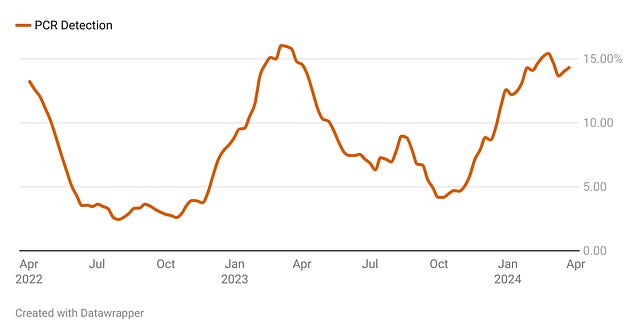
We are slowly coming down from a peak in respiratory illness. This past winter was a real test. How will our hospitals—the safety net of our society—fare, given the combination of:

  1. Year 4 of a pandemic with a new threat to our repertoire,
  2. A recent surge of respiratory viruses,
  3. An aging population, and,
  4. A massive infrastructure problem decades in the making.

The answer is in—our hospitals are overwhelmed. And it has now reached a crisis point. It is killing people.

Emergency medicine doctors across the country have been sounding the alarm. Americans are noticing it too. In a recent poll, nearly half of Americans said they avoid the ER—avoid critical care they need—given the wait times.

Here’s what is happening on the front line and how to fix it.

A dangerous hospital overload problem called “boarding”

The emergency room (ER) is the front door of the hospital. Patients come and are quickly seen by a physician, who addresses medical emergencies and other needs. After evaluation and treatment, many are well enough to go home, and some require admission to the hospital. Those admitted patients are seen by the inpatient team of doctors and taken to a hospital bed upstairs.

Figure by YLE

But what if there are no open beds upstairs? Those patients wait in the ER until a bed opens. These patients are called “boarders.”

Figure by YLE

Over the last two decades, this problem has grown and grown, causing a nasty clog. We haven’t fixed it, and it’s now overwhelming ERs nationwide.

The fallout

Boarding patients are waiting hours, days, or even weeks in the ER. It creates an unsafe environment for patients:

  • Dangerous medical errors: ER boarding is associated with increased medical errorsworse patient outcomes, and higher risk of in-hospital death.
  • A recent study found that an extra hour of boarding was associated with a 16.7% increase in the odds they would require a higher level of care in the hospital (i.e., they were going to the floor, but now need the ICU.)
  • Death: In a nationwide survey, multiple ER physicians reported deaths that occurred because their ER was overwhelmed with boarding. For some, the backlog of patients is so bad that patients are dying in the waiting room before they can see a doctor.

Here’s why:

  1. Waiting too longCritically ill patients in the waiting room may not be recognized fast enough, and patients may leave because of the wait, only to come back the next day much sicker than before.
  2. Unsafe nursing ratios. Unlike inpatient floors and the ICU, there are often no caps on the number of patients an ER nurse is assigned. In the ICU, each nurse has 1-2 patients. In the ER, a single nurse can have 7 patients or more, some requiring ICU level of care.
  3. No inpatient doctor. Normally when a patient is admitted to the hospital, the ER doctor’s role ends and the inpatient doctor takes over, freeing up the emergency physician to see new patients. For boarding patients, often there is no inpatient doctor. Instead, emergency physicians are ordering critical medications and checking on boarding patients when they can. But realistically, they can only do so much while still responding to all the new cardiac arrests and strokes coming through the door.
A crowded emergency department waiting room

Why is boarding happening?

The primary problem is not the number of patients coming to the ER. It’s the lack of open beds upstairs. A recent NEJM commentary provided some insight:

  • No buffer in the hospital. To optimize revenue, hospitals try to keep their beds full, which means there’s little buffer for predictable surges of patients.
  • Weekend delays. Many hospital operations stop on weekends. Patients who otherwise could be discharged are delayed because a service they need is not available.
  • Prioritizing elective surgeriesElective surgeries bring in more money, so sometimes hospitals prioritize beds for surgeries instead of sick patients waiting in the ER.
  • Nursing home shortages. Sometimes patients are ready to be discharged, but no nursing home bed is available. (Or a bed is available, but their insurance hasn’t approved it yet.)
  • Staffing shortages. As we learned during the pandemic, it doesn’t matter if we have an open bed upstairs if there isn’t staff for it.

How do we fix this?

Hospitals are financially disincentivized from fixing this problem. We need regulatory institutions to step in. The Centers for Medicare and Medicaid Services (CMS) is a strong player as they certify hospitals to receive Medicare funds, define safety standards, can require public reporting of hospital data, and manage many “pay for performance” programs. If CMS approves a new quality measure focused on boarding, it has the potential to do 3 things:

  1. Get data. We do not have national data on the boarding crisis because hospitals are not required to report it. We are dependent on on-the-ground anecdotes, which hospital staff are often afraid to share. CMS can require public reporting of this data.
  2. Set standards. Currently, there are no standards defining how long patients can board in the ER or how many patients a single ER nurse can cover.
  3. Create better financial incentives. Once publicly reported, quality measures may be used in pay-for-performance programs that would reward hospitals that best manage capacity challenges by minimizing boarding.

new CMS clinical quality measure on boarding is finally in the works, but it’s not yet approved. For a limited time (until February 16, 2024), the public can comment on this proposed measure and provide input. Typically, only parties invested in ignoring the problem comment. I’m asking you to change that:

  • ER physicians/nurses/staff: Look at the proposed metrics to track boarding, and provide any input you have here. These are metrics that hospitals would be required to report if the CMS measure is approved.
  • Everyone else: If you don’t have the time or experience to comment on the specific metrics, then go to the second page of the survey, and tell your stories about ER boarding. Thousands of responses from all of you will show CMS this is a giant problem that needs to be fixed.

Bottom line

Emergency rooms are the only place in the U.S. healthcare system that will never turn a patient away. And we don’t want them to. But a backlogged ER is the canary in the coal mine—our inadequate healthcare infrastructure showing its massive cracks. It is unsafe, and we must fix this.

Love, KP and YLE


Kristen Panthagani, MD, PhD is an emergency medicine physician at Yale. In her free time, she is the creator of the medical blog You Can Know Things. You can subscribe to her newsletter here

“Your Local Epidemiologist (YLE)” is written by Dr. Katelyn Jetelina, M.P.H. Ph.D.—an epidemiologist, wife. During the day, she is a senior scientific consultant to several organizations, including CDC. At night, she writes this newsletter. Her main goal is to “translate” the ever-evolving public health world so that people will be well-equipped to make evidence-based decisions. This newsletter is free, thanks to the generous support of fellow YLE community members. To support this effort, subscribe below:

Posted in Uncategorized