WPCNR THE LETTER TICKER. From the Gedney Association April 27, 2019:
| Dear Neighbors, Please see the letter below that was sent to the Common Council April 25, 2019 with regard to FASNY’s recent announcement to sell a portion of its property. The Gedney Association |
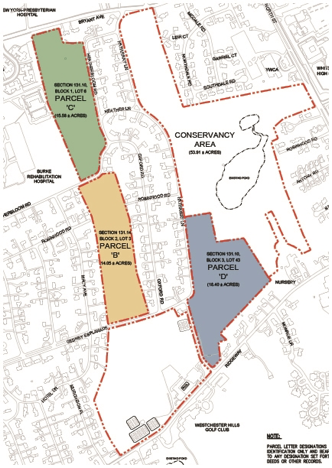
| April 25, 2019 Members of the Common Council White Plains City Hall 255 Main Street White Plains, New York 10601 Re: FASNY Press Release Dear Members of the Common Council: The recent Press Release by the French American School of New York (FASNY) announcing its intention to sell approximately 48 acres of the former Ridgeway Country Club has caused considerable confusion and indignation by many residents in Gedney Farms as well as other adjoining neighborhoods. In announcing its intention to sell a portion of its property, FASNY has contradicted the essence of its earlier assurances that it would not expand beyond the approved campus. During the Common Council’s final deliberations on the FASNY proposal, Councilwoman Hunt-Robinson expressed concerns regarding the development of Parcels B, C and D and the need to consider, if necessary, mitigation of any adverse impacts. This question was entirely appropriate and essential under the New York State Environmental Quality Review Act (SEQRA), which mandates consideration of potential development of an entire property. Segmentation or limiting review to only part of a property is prohibited under the law. In response to Councilwoman Hunt-Robinson’s questions, FASNY proposed postponing any additional development on the property. As a result, the Common Council’s approval letter stipulated that, “An application will not be filed to expand the school use on any of the four former Ridgeway Country Club parcels for at least fifteen (15) years from the date FASNY receives a temporary or permanent Certificate of Occupancy for the School”. This clever subterfuge did not go unnoticed by the Gedney Association which cited non-compliance with the SEQRA requirement in its lawsuit challenging the approval. The announcement by FASNY to sell separate parcels clearly demonstrates how the SEQRA requirements were violated during the approval process. Regrettably, the City Administration permitted FASNY to obfuscate their real intentions. In fact, the City Administration was complicit in this deception. For example, FASNY quietly removed the bike trail from Parcel C that previously was so integral to Mayor Roach. Why was this removed other than to enable FASNY to sell this and other parcels for development? FASNY is now attempting to sell three parcels, presumably for development. One of the parcels slated for sale, Parcel D, is directly across from the entrance to the planned school on Hathaway Lane. How would traffic circulation operate here with approximately 1,000 vehicles entering and exiting the school each day? Furthermore, Parcels B and C front on Gedney Esplanade and Heatherbloom Road, two already heavily trafficked streets. Doesn’t this highlight why the FASNY approval should only have been made after careful consideration of other potential development? So where does that leave us? Instead of a carefully planned development of the former golf course we have a hodgepodge plan. Since the approval, traffic on Ridgeway has measurably increased according to City studies. FASNY appears to change its plans weekly. Indeed, its own website suggested it might find a separate alternative location for its “unified” campus. Also, the so-called Conservancy isn’t permanent, in that, if FASNY leaves, the Conservancy disappears. In the meantime, the property continues to be very poorly maintained with fallen trees and beer cans and other refuse littering the property. The City has lost hundreds of thousands of dollars in taxes for what now appears as an investment speculation by FASNY. Is the City Administration assessing the loss of another 48 acres of open space or will it again take a reactive stance? Last November, when reports of FASNY’s plans to sell all or part of the property became widespread, the Gedney Association wrote to the Mayor and Common Council requesting a meeting to discuss the neighborhood’s concerns and objectives for any new alternative development. With the exception of Councilwoman Lecuona, no response has been received from the City Administration. As residents and taxpayers, we would minimally have expected a response. Very truly yours, The Gedney Association Board |
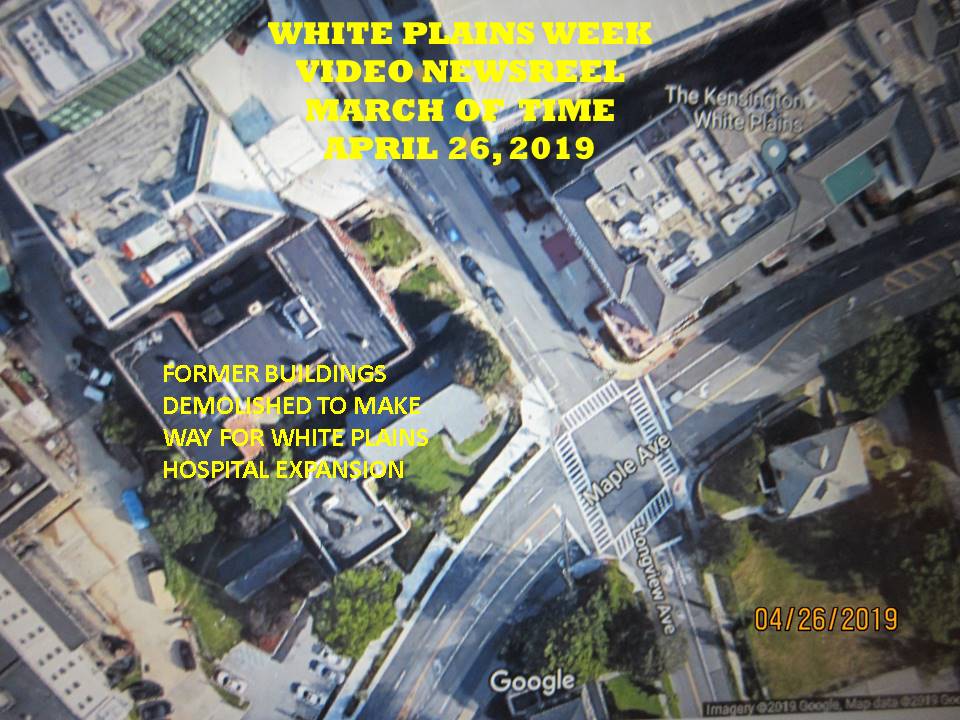
WPWeek for 4-26 has been posted
The YouTube link is https://youtu.be/EI2BfyfigpU
The whiteplainsweek.com link is http://www.whiteplainsweek.com/

SEE IT AT 7:30 FRIDAYS AND 7 PM MONDAYS COUNTYWIDE ON FIOS CH 45 AND IN WHITE PLAINS ALTICE CH.76 AND ON www.wpcommunitymedia.org
WPCNR THE POWER STORY. APRIL 25, 2019 UPDATEDL 11:45 PM EDT:
In light of Con Edison announcement of new gas supply arrangements with Tennessee Gas Pipeline, WPCNR asked Con Edison why, if no new pipeline was needed, why not lift the moratorium on new natural gas connections in Westchester, especially since that capacity will be there in 2023, and it most likely will take three to four years to build the 1,600 Westchester projects that got in under the moratorium deadline.
Ann Marie Corbalis, speaking for Con Edison issues this statement:
“Demand for natural gas in New York City and Westchester County has grown significantly in recent years due to conversions of heating systems from oil, as well as economic growth, with developers preferring natural gas in new buildings. The lack of new gas capacity in our region has forced us to stop accepting applications for new firm (uninterruptable service) gas hookups until we have new capacity available. Once that capacity is secure, which is expected by November 2023, Con Edison will lift the current moratorium on new firm gas hookups in Westchester.
Ms. Corbalis referred WPCNR to Tennessee Gas Pipeline. Katherine Hill, a spokesperson for TGP, issued this statement to WPCNR on how TGP can deliver to Con Edison the new natural gas capacity Con Edison requires without building a new pipeline:
“The Tennessee Gas Pipeline project will only involve compression upgrades to facilities on the system upstream of New York. Additionally, the project will require the Federal Energy Regulatory Commission (FERC) approval, and state and local approval as necessary.”
WPCNR has for more details on what compression upgrades are
required and what they are.