
Enjoying this newsletter? Why not share it with a friend? Universal childcare, NYC nurses’ strike, ACA subsidies, and the fluThe NY Dose

There’s a lot happening in New York health right now—from universal childcare plans and the NYC nurses’ strike to rising healthcare premiums and continued flu. Let’s jump right in. Gov. Hochul and Mayor Mamdani announce a plan for universal childcare in New YorkLast week, Mayor Mamdani and Gov. Hochul announced a joint plan to bring truly universal childcare to New York City and extend it across the state. Why this mattersAccess to high quality childcare has been shown to benefit children’s and parents’ health and wellbeing:
It’s important to note that the quality of the care is what’s most important, not necessarily where the care takes place. High quality care and education can take place at childcare centers or inside the home, and with community-based caretakers or family members. What’s the plan?The joint plan to expand childcare in NYC and the rest of the state is mostly driven by funding additional childcare facilities and increasing staffing levels. In NYC, the additional funding would help make 3k (childcare for 3-year-olds) access truly universal. Right now, many families qualify for 3k but don’t have spots available in their neighborhoods, requiring them to commute unfeasible distances or find/pay for other childcare. The funding would increase facilities and staffing in NYC. The proposal would also launch a new “2-Care” program in the city, providing free childcare for 2,000 2-year-olds in high-need areas beginning this year. The program would then be expanded citywide over four years, with the state fully funding it for the first two. The state’s goals are to expand childcare to all 4-year olds (also called pre-k) statewide by fall 2028, and help counties build pilot programs to offer affordable childcare. Hochul said the broader statewide plan would increase affordable childcare to nearly 100,000 additional children through a mix of universal pre-K expansion, new community-based care programs, and broader eligibility for childcare subsidies. The plan also includes:
How will it be funded?The governor has committed a $1.7 billion investment to expand childcare across the state. If the legislature approves the budget, total childcare and pre-k funding will be $4.5 billion for fiscal year 2027. The current proposal uses funds that already exist and would not currently require increased taxes. However, a plan for long-term funding of the expansion has not been proposed. What happens next?To accomplish the goals of universal childcare in New York, there are a couple of big milestones ahead:
Making childcare truly universal in New York has great potential to improve the health of children and parents. I’ll be watching its progress closely and reporting back. ~140,000 New Yorkers now face higher healthcare costsRemember the 43-day government shutdown in the fall? (Feels like years ago already, I know…) One of the issues at the center of the debate was whether to extend health insurance subsidies under the Affordable Care Act (ACA). While the government eventually reopened, Congress never reached an agreement, so the enhanced subsidies expired on December 31, 2025. Now, 140,000 New Yorkers, and millions of Americans across the country, are seeing their health insurance costs substantially increase. I did a deep dive on ACA subsidies in November, but here’s a quick refresher: Under the ACA, coverage in New York is tiered based on income, anchored to the Federal Poverty Level (FPL). Before 2021, anyone making just $1 over 400% of the FPL—roughly $60,000 for an individual or $124,000 for a family of four—got zero financial help through the ACA. This was called the “subsidy cliff.” It disproportionately affected those who don’t get insurance from an employer and don’t qualify for Medicaid or Medicare. This includes many self-employed or freelance workers, small business owners, farmers, and early retirees, among others. In 2021, the pandemic relief package removed the subsidy cliff, allowing anyone to get financial help if their premiums were greater than 8.5% of their income. But when the ACA subsidies expired at the end of last year, the cliff came back. Gov. Hochul’s office estimates the average healthcare cost for a New York couple who previously qualified for ACA subsidies is now up 38%, meaning an additional $238 per month. That’s nearly $3,000 more per year for couples. It also varies across New York; Mohawk Valley has seen the steepest increase at 49%.
Data from Governor Hochul’s Office. Despite the increases, there are some signals that Congress may be moving towards getting these subsidies back up. Earlier this month, the House passed a bill to reinstate and extend the ACA subsidies another three years; this moved to the Senate for consideration, where negotiations are ongoing. (A similar bill was voted down just last month.) If you have questions about your New York coverage options, premiums, or eligibility, call 1-855-355-5777 or visit nystateofhealth.ny.gov. The deadline to enroll in a Qualified Health Plan (i.e., if you aren’t eligible for Medicaid, Medicare, the Essential Plan, or Child Health Plus) is January 31st. I’ll also keep watching this and share updates as they come. NYC nurses strike: what’s happening and what it means for youThis week, nearly 15,000 nurses across some of NYC’s major hospitals—Montefiore Medical Center, Mount Sinai Hospital, Mount Sinai West, Mount Sinai Morningside, and New York-Presbyterian—went on strike. This is the largest healthcare strike in NYC’s history. Why are they striking?The union is calling for:
The hospitals have pushed back on the demands, stating they would cost billions of dollars over the next three years and that they can’t afford the increases in light of healthcare funding cuts from the One Big Beautiful Bill Act. They also say these funding issues will be exacerbated as more New Yorkers lose health insurance, resulting in more uncompensated medical care. What this means for patientsThe New York State Nurses Union is encouraging patients to continue seeking care at the hospitals. In preparation, hospitals have brought in travel nurses and temporary staff, and Governor Hochul issued an executive order to temporarily suspend certain licensing and practice restrictions so that clinicians who are licensed and in good standing elsewhere can work in New York without penalties, allowing hospitals more flexibility to keep adequate staffing. Still, hospitals may resort to transferring patients to other hospitals if capacity is strained. How long will it last?The last major NYC nurse strike in 2022 lasted three days. This one is much larger with the potential to cause more disruption to hospital systems—the longer it continues, the more pressure hospitals may face to delay non-emergency procedures and divert incoming patients. Why it mattersStaffing ratios are a public safety and health equity issue. Studies show that safe nurse staffing is linked to lower patient mortality, shorter hospital stays, and better health outcomes. A 2002 JAMA study showed that:
Ensuring nurses have the time and bandwidth to adequately care for their patients is vital. I’ll keep you updated if anything changes. Infectious disease “weather report”Flu: It looks like flu may have peaked in New York, but levels remain very high across both the state and NYC. Even with recent declines over the past two weeks, we’re still at levels close to the peak of the 2023-24 season. In short: flu is still widespread in New York.
Flu cases in NYC. Figure from the NYC Department of Health Respiratory Illness Dashboard. Annotations by YLE. I wouldn’t be surprised if we saw flu pick up again—that happens in some seasons. Because flu will still circulate into February and March, it’s not too late to get your flu shot. RSV: Remains high but may have plateaued. (I know I said that last week, but the data is holding.) The good news is that RSV this season is lower than in the past two years.
RSV cases in NYC. Figure from the NYC Department of Health Respiratory Illness Dashboard. Annotations by YLE. Covid: In good news, Covid is still low across the state. State case data show that it may have peaked, and at a lower level than the late-summer surge we saw earlier this year.
Covid cases in New York this season and last season. Figure from the NYSDOH Respiratory Surveillance Report. Annotations by YLE. Bottom lineThere’s a lot going on in the New York health policy world, with many evolving situations that I’ll keep a close eye on. From an infectious disease standpoint, flu is still the biggest concern right now. Staying cautious, especially in crowded indoor settings, is still a smart move, particularly for those at higher risk (older adults, people who are immunocompromised, pregnant, etc.). Love, Your NY Epi |


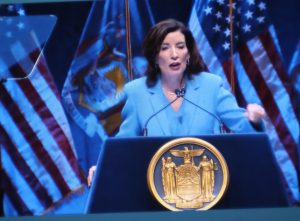
JANUARY 13–GOVERNOR KATHY HOCHUL DELIVERS “STATE OF THE STATE” ADDRESS FOR THE AGES

Governor Announces Investments Toward Statewide Universal Child Care To Make New York More Affordable for Families
Cracking Down on Fraud To Reduce Insurance Rates for Drivers and First-In-Nation Plan To Address Excessive Home Insurance Company Profits
Proposing Sweeping Reforms to Protect Ratepayers From Rising Utility Costs
Advancing First-In-The-Nation Legislation To Crack Down on Illegal Homegrown 3D-Printed Guns
Protecting New Yorkers’ Constitutional Rights, Religious Freedom and Access to Care
Launching The ‘Let Them Build’ Agenda, a Series Of Landmark Reforms To Build Housing and Other Critical Infrastructure Projects Faster and at Lower Costs
Committing $50 Million To Reimagine Jamaica Station; Planning To Advance Second Avenue Subway Westward Expansion
Promoting Youth Mental Health and Safeguarding Kids Online
Amidst Federal Attacks, State Continues To Lead With Transformative Investments To Strengthen Safety Net Hospitals
Protecting New Yorkers’ Personal Information by Cracking Down on Shadowy Data Broker Industry
Requiring Labeling for AI-Generated Content, Protecting Elections From Misleading or Deceptive AI Content, and Prohibiting Misleading ‘Discounts’ to Consumers
209 Transformative Proposals To Make New York More Affordable, Keep People Safe and Expand Opportunities
2026 State of the State Book Available Here
Hello New York!

I want to thank the Pride of The Orange marching band. The best marching band in the country as far as I’m concerned. I want to acknowledge the leader of the Senate, Majority Leader Andrea Stewart-Cousins, and Assembly Speaker Carl Heastie — two extraordinary leaders I consider incredible partners as we chart the path forward for New York.
Our protector, Attorney General Tish James. Keeper of the coffers, Comptroller Tom DiNapoli. From Buffalo, Assembly Majority Leader Crystal Peoples-Stokes. Senate Minority Leader Rob Ortt. Assembly Minority Leader Will Barclay. Judges of the New York Court of Appeals. New York City Mayor Zohran Mamdani. And Mayors and County Executives from across the State
Representatives from labor and distinguished guests. Members of my Cabinet. Secretary Karen Persichilli Keogh and the Executive Chamber senior team.
And I’m very proud to acknowledge New York’s very first ever First Gentleman, my husband, William Hochul.
Today, on this 13th day of 2026, we will embark on a journey together. A State of the State address is a chance to look to the future. But this year calls for us to reflect on something bigger than this moment:
The origins of our nation, founded 250 years ago this year, and how that history shapes where we are and where we must go from here.
From the very beginning, New Yorkers have always been a rather rebellious lot, willing to take on forces larger than ourselves in the cause of liberty and freedom.
That resilience, that strength, that spirit, that willingness to fight for a better future was born in secret meetings in the taverns of Albany and New York CIty — charting a path forward under the weight of an oppressive power.
And later, with New York as our country’s first capital, our bold revolutionary leaders became the governing leaders of a New Nation with unlimited possibilities.
Over my four years as your Governor listening to your stories, feeling the pulse of this great state, I have seen that same strength, the resilience, the optimism that defined New Yorkers 250 years ago.
As I shaped our agenda for 2026 and beyond, I kept returning to my conversations with New Yorkers from every corner of the state — people who refuse to back down on their dreams.
People like Theresa Durham, a Syracuse grandmother I was lucky enough to meet last May.
Thanks to our housing policies, Theresa just fulfilled her lifelong dream of owning a home.
People like Deborah Koenigsberger who owns a clothing boutique in the Flatiron District.
Her business is getting hit so hard by Trump’s tariffs. And somehow, she’s making it work while leading a nonprofit that supports homeless women and children.
I think of people like 14-year-old Joziah Morales, who found the courage to seek help when he was struggling with his mental health. Today, he’s out there sharing his inspiring story, reminding his peers it’s okay to accept a helping hand.
So when I say your family is my fight, these are the people I’m talking about.
I carry their stories and those of countless others with me, because I’ve lived my own version of them. Growing up in a cramped home just outside Buffalo, sharing a drafty attic bedroom with my brothers, doing homework late at night by a space heater after finishing a shift at the local pizzeria not knowing where my path would lead. But I learned when people work hard, and when someone has their back, it can change the course of their entire life.
That’s why I believe with my whole heart that government can and must be a force for good. And over the last four years, we’ve proven it. We took our State emerging from a crisis and powered a comeback that few believed was possible.
Crime is down in the places New Yorkers feel it most. Our streets, our subways, our communities are safer than they’ve been in years.
We also know people need a safe place to live. That’s why we secured the most significant housing deal in half a century so young families can put down roots.
We expanded child care, capped the cost of insulin and launched the nation’s very first paid prenatal leave program.
We also made historic investments in clean energy, chips manufacturing and advanced technology, creating tens of thousands of good-paying jobs. And the impact is undeniable.
Retail is surging. More college graduates are moving to New York than anywhere else in the country. We’re leading the nation in return-to-office. From Babylon to Buffalo, New York is rising.
If you’re betting on the future, you need to bet on New York. If you’re searching for talent, you find it in New York. If you’re looking for the epicenter of culture, innovation, opportunity, it has always been and remains New York.
My friends, I am proud to say: The State of our State is strong! And we’re just getting started.
But I need to level with you: This moment carries real threats from Donald Trump and his enablers in Congress. Driving up costs on everything from groceries to farm equipment through these reckless tariffs. Killing major infrastructure projects that put union members to work. Tearing nursing immigrant mothers from their babies and calling it public safety.
And just last week, the world watched as an immigration operation in Minneapolis that never should have happened — left a child without a mother, and a community, and indeed a nation, shattered.
It’s all part of an agenda that only makes our lives harder.
Well, here’s the thing about New Yorkers: We don’t back down. We rise up.
When they tried to take away funding for first responders and law enforcement, we made them restore it. When they tried to kill congestion pricing, we beat them in court again and again. The President even made another threatening post less than 24 hours ago. But my message to the wannabe king remains the same: We will not bow.
Yes, this is a year of real uncertainty driven by reckless federal policies. Washington’s chaos is hitting our bottom line. But we’ve built the boat to withstand the storm. Because we’ve managed our money responsibly. We’re able to make transformative investments in our future. Without raising taxes. Without saddling the next generation with mounds of debt.
Four years ago, we laid out a bold vision. I took responsibility for making it real.
And in 2026, we’re seeing the results.
Clean hydropower flowing in from Quebec to power more than a million New York City homes.
Long-stalled housing projects rising from the ground.
A new stadium bringing pride and investment to Western New York. Go Bills!
The brand new Belmont Park carrying racing into the future.
The World Cup, drawing soccer fans from across the globe.
Critical infrastructure being rebuilt, from the Port Authority Bus Terminal to our bridges and tunnels.
Expanding the Second Avenue Subway even further.
And with the Interborough Express, we’ll connect Queens and Brooklyn like never before.
Even the renovations at Penn Station long dreamed of are on a path forward.
Families will get more breathing room.
Another minimum wage hike.
Better paid family leave. A child tax credit up to $1,000 and the lowest middle class tax rates in 70 years. Let me repeat, the lowest in 70 years! And we lifted a major burden for businesses, paying off billions in unemployment insurance debt while increasing benefits by 70 percent.
That’s a critical safety net for anyone who finds themselves out of work.
What else can we look forward to in 2026?
World-renowned companies reinvigorating communities long overlooked: Micron in Onondaga County shovels in the ground not 3 years from now, but 3 days from now! GlobalFoundries in Saratoga County. Fairlife in Monroe County. Chobani in Oneida County.
These wins are the results of fights we took on investments we made and a future we chose together. And when I say “together,” that includes my great partners in state government who are with us today. And it also means the local leaders who work around the clock keeping our towns and cities running.
Let’s hear from some of them.
As your Governor, I am proud to lead the fight to protect communities and build an economy that works for all! And today I’m here to tell you how we continue that fight, and it starts with making life more affordable.
Whether we’re talking about child care, groceries or utility bills, one thing is clear: Parents, veterans and seniors need relief. That’s why, last year alone working with the Legislature, we put $5,000 back in the pockets of hardworking families.
But now, Washington Republicans are waging an all-out war on the middle class: Driving up costs and leaving states to pick up the pieces. So this year, while Washington takes a machete to our safety net, I’m doubling down on the fight for a more affordable New York starting with child care.
For working parents, no cost is more overwhelming. I know how urgent this is because I’ve lived it.
When my husband Bill and I were starting out, child care was one of our greatest obstacles. I was fresh out of law school working my dream job on Capitol Hill with Senator Daniel Patrick Moynihan. But when our babies arrived, I had to give that career up simply because we could not find affordable child care.
It was heartbreaking.
It was tough then. And for too many families today, it’s almost impossible.
Get this: In New York City, child care costs between $26,000 and $40,000 a year. For that price, your toddler should be fluent in three languages and doing your taxes.
One year ago, I stood on this very stage and placed our state on the path to Universal Child care. Today, I stand before you with a clear roadmap to show how we’ll get there. Building on over $8 billion in child care investments that my Administration has made since 2022, this plan will ultimately deliver Universal Child care for every single family in New York.
Full stop.
The work has already begun. Five days ago, I stood with Mayor Mamdani to announce the State will fully fund the first two years of his Universal 2-Care program while also helping New York City realize the full promise of Universal 3-K.
Statewide, we’re taking a different, but equally ambitious approach:
Universal Pre-K for every single 4 year old by 2028!
This year, we’ll also pilot community-wide child care to provide year-round, full-day, affordable care for newborns to 3 year olds.
And we’ll build on the proven success of our State Child Care Assistance Program and our voucher system so tens of thousands more families can access high-quality care for no more than $15 per week.
Thanks to our strong economy, we have the revenue to get these initiatives off the ground.
But to keep our momentum going, we need partnership from the private sector.
So we’ll work with employers and improve tax incentives for those who invest in child care benefits. We want New York to be the number one place for anyone about to start a family and build their future.
When that happens, we all win.
Our classrooms are fuller.
Our economy is stronger.
And our communities are richer in every sense of the word.
But affordability doesn’t stop at child care. Right now, the average New York household pays nearly $1,700 per year just to keep the lights on and the heat running. And Donald Trump’s stop-work order on offshore wind will only make it worse in the long run.
I’m fighting it every step of the way.
But while that battle continues we’re taking action now streamlining utility assistance helping homeowners make energy efficient upgrades and protecting New Yorkers from being blindsided by exorbitant rate hikes.
We can make energy more affordable and reliable today while still leading the nation in sustainable investments, leaving this state stronger for our children and grandchildren.
And there’s another affordability issue that’s been apparent for years: The sky-high cost of auto insurance.
Because in many parts of our state, owning an automobile is not a luxury, it’s essential. Yet, New Yorkers pay the highest auto insurance rates in the nation,averaging $4,000 a year — $1,500 more than the national average. Not because New Yorkers are doing anything wrong, but because rampant fraud and runaway litigation costs are jacking up prices.
Let’s be clear about how that happens. When the system allows out-of-control payouts. Those costs get passed on to you in the form of higher monthly bills.
New Yorkers should not pay more for the same coverage. And this is the year, we’re going to do something about it.
We’re putting the brakes on fraud and ending a system that rewards illegal behavior. If you were driving drunk, driving without a license, or committing a felony at the time of a crash, you should not get a payday.
This is about finally standing up for millions of New York drivers who deserve a break.
And this year, we’ll continue cracking down on criminals of all kinds.
When I came into office, New York was facing a crisis of crime and disorder.
In the two years before I arrived, shootings had nearly doubled. Repeat offenders were cycling in and out of the criminal justice system. And too many people felt unsafe.
I promised New Yorkers to do everything in my power to restore safety and security.
We backed that promise with action. We made unprecedented investments in police and public safety over $3 billion. We enacted the strongest gun laws in the nation along with common sense reforms to keep serial lawbreakers off the streets and stop criminals from walking free on technicalities.
We equipped police with the best technology, deployed more officers in our subway, formed specialized units to crack down on retail theft and domestic violence.
Four years later, crime is hitting record lows. Shootings, homicides and subway crime all down
But we will never be satisfied. This year, we’re building on what works using data, coordination and smart enforcement to stay ahead of criminals.
We’ll expand our successful network of Crime Analysis Centers statewide. On our subways, we’ll maintain enhanced police patrols, install platform barriers at 85 additional stations and expand our elite mental health units that get people in crisis off the train and into care.
We’ve stemmed the tide of firearms flowing into our state along the iron pipeline. And now, we’re taking aim at the plastic pipeline.
Illegal 3-D printed ghost guns are homemade killing machines assembled with pieces you can easily purchase. To fight back, I’m proposing a first-in-the-nation law requiring ALL 3-D printers sold in the State of New York to include software that blocks the printer from creating a gun.
And we’re putting gun manufacturers on notice: You will no longer sell handguns that can be converted into automatic machine guns — that are able to fire 1,200 rounds per minute.
Not here. Not in New York. That’s how we save lives and fight crime.
As we reflect on freedoms fought for 250 years ago, among them is the freedom to practice your religion without interference.
In 2026, we’ll take new steps to protect our houses of worship against the rising tide of Antisemitism and Islamophobia. New York has already invested $131 million to better secure these sacred places. But clearly, more must be done.
Just last week, protestors led pro-Hamas chants outside a Synagogue in Kew Gardens Hills. That’s not free expression. That’s harassment. And targeting a Jewish community in this way is antisemitism.
That’s why I’m proposing a ban on protests within 25 feet of the property line at houses of worship. So those who simply want to pray can do so without fear or harassment.
My responsibility for keeping New Yorkers safe extends to protecting our children as well.
We’ve taken on Big Tech and passed nation-leading laws. So kids will no longer be subjected to addictive algorithms that manipulate their minds.
They will no longer be targets for mega- corporations monetizing their mental health. And now when the school day begins, their phones are tucked away under our bell-to-bell ban.
In just four months, the transformation has been extraordinary.
Classrooms are alive with discussion. Laughter fills our lunchrooms. And Frankie Focus haunts our childrens’ dreams.
Building on our success, I say we enact new requirements to protect all social media users under 18: Let’s block direct messages from would-be child predators with automatic privacy settings. Let’s disable A-I chatbots that can cause serious mental health problems.
Let’s block location-sharing and let’s do more to cut off access to online sports gambling so our kids are not ensnared by addiction at a young age.
You’ve heard me say that our communities cannot reach their full potential without an abundant supply of safe, affordable housing.
For too long, over-burdensome regulations made it too hard not just to build homes but the places people work and the infrastructure our future depends upon.
That’s why four years ago I made a commitment: To challenge the status quo, cut red tape and clear the way to build, build, build!
Working with the Legislature, we took on a system that was failing our families and passed the most significant housing deal in 50 years!
We made it clear: Standing still is no longer an option. The result? We saved over 71,000 homes that were at risk of being scrapped.
And we opened the door for another 800,000 over the next decade!
We’ve funded shovel-ready projects, strengthened tenant protections, turned vacant properties into homes and protected rent-regulated housing.
Local governments are stepping up, too. Over 400 pro-housing communities have agreed to build more homes because we lead with carrots. not sticks.
Under my approach, communities that say yes to housing get access to $750 million in state funding.
We’re changing the culture around building brick by brick.
This year we’ll invest an additional $250 million for affordable housing and $100 million to scale innovative, manufactured housing that lowers costs and speeds construction.
And we’ll update tax incentives to help owners of rent-regulated buildings in New York City make repairs and investments.
Meanwhile, we’ll crack down on the worst landlords with increased penalties and strengthen rent relief for seniors and New Yorkers with disabilities.
But as far as we’ve come, too many projects still get stuck.
Not because they’re bad ideas but because the system itself has become the obstacle.
Even projects everyone agrees we need affordable housing, clean energy. Critical infrastructure can spend years trapped in red tape pushing up costs and pushing opportunity further out of reach.
So this year, we’re taking a hard look at environmental review processes that haven’t been updated in literally half a century.
Right now, they slow down the very projects that help us fight climate change, create housing and strengthen our communities.
That’s why, in this budget, I’m proposing a simple, common-sense update: When communities say yes to housing, infrastructure, or clean energy, we’re going to LET THEM BUILD!
When a town or city decides to move forward they shouldn’t get stuck in regulatory hell.
Cutting red tape doesn’t end at the construction site, it extends to government as well.
This year, we’ll also eliminate outdated and onerous regulations and leverage cutting-edge technology to make government work better.
But we’ll also do it the old-fashioned way, talking to small business owners and other impacted New Yorkers about the bureaucratic barriers that are holding them back.
People deserve to know their tax dollars are being spent wisely and their government is operating efficiently.
And we’re bringing that same productivity as we build the jobs of the future.
Today the Empire State is home to over 8.5 million private sector jobs, almost a million more than when I took office.
And now we’re forging ahead tapping into the creativity that has always defined our state.
200 years ago the Erie Canal made New York an industrial powerhouse. It sustained generations of manufacturing jobs and entire communities.
But when those jobs were shipped overseas in the ‘70s, communities like mine paid the price.
I remember the year the steel plant shut down in Buffalo and the toll it took. I saw it in the bustling businesses gone dark. In the drawn faces I passed on the sidewalk drained of hope.
None of my siblings could find a job.
They couldn’t stay in Western New York.
That taught me a lesson I’ve never forgotten: New York should never be left at the mercy of decisions made far away with no regard for people here at home.
So we’re ushering in a rebirth of manufacturing one that’s built to last. In 2022, we enacted the nation’s largest semiconductor incentive program ensuring the defining technology of our time would be built in New York by New Yorkers.
We’re already landing the world’s largest chipmakers.
But we must ensure these fantastic opportunities are within reach for all not reserved for a select few.
That’s why we’re investing over half a billion dollars to help New Yorkers gain the skills they need to succeed.
It starts with the fundamentals.
That’s why two years ago I took on entrenched interests and insisted that we go back to basics teaching kids how to read and doing away with ineffective methods.
We took on that fight and we won.
This year we’ll take the same approach with math preparing the next generation for the jobs of tomorrow.
And for those who want to embark on a new career, we launched free community college for adult learners pursuing high-demand careers from health care to advanced manufacturing.
Since last summer, more than 11,000 people have enrolled.
This year let’s expand that opportunity even further adding new fields like logistics, air traffic control and emergency management.
And speaking of preparing for the future, we must plan for the energy that industries require.
Last summer, I took the bold step of greenlighting the first nuclear power project in a generation, a vital part of our all-of-the-above approach to energy.
At the time we set a goal of building one gigawatt of nuclear power.
But if there’s one thing I believe, it’s this: Go big or go home.
So I’ve decided to raise the bar to five gigawatts.
That’s more nuclear energy than has been built anywhere in the United States in the last 30 years!
And to make sure New Yorkers are ready, we’ll launch a nuclear workforce development program so we can forge our clean energy future together.
Let me be clear: our energy system exists to serve New Yorkers first.
Data centers are vital for an innovative future. But they guzzle up tremendous amounts of energy and leave ratepayers footing the bill.
So if they want to build in New York, they’ll have to pay their fair share for the power they use and ultimately generate their own power independently.
Because we will not allow technology to undermine our infrastructure, and we won’t let it undermine our democracy, either.
People deserve to trust what they see and hear during election season.
So this year we’ll require disclosures on all AI-generated images and videos so New Yorkers know what’s real and what’s not.
And we’ll strengthen our existing laws to prohibit deepfakes that impersonate candidates, deceive voters and manipulate elections.
So take a good look at these guns cause it’s the last time you’re gonna see them.
All jokes aside, New York has always been a place where fundamental rights are vigorously defended.
And at a moment when those rights are under direct attack, New York is doing what we’ve always done: We’re standing firm.
When Roe v. Wade was overturned, we acted immediately protecting abortion access and shielding patients and providers from political persecution.
We enshrined the Equal Rights Amendment in the State Constitution and strengthened one of the nation’s oldest Human Rights laws.
But over the last year, that record has come under siege by the Trump administration.
One of the clearest examples of what’s at stake is the right to health care. Republicans in Washington want to drive up premiums, deny coverage, and force families to choose between seeing a doctor and paying their rent.
Here in New York we are fighting like hell to stop them. This year, we’ll protect affordable health care for more than 1.3 million New Yorkers. And we’re also protecting access to lifesaving vaccines.
Last year, when pharmacies began turning people away I declared an emergency and expanded who can prescribe and administer vaccines so no New Yorker is left unprotected.
This year, I’ll go further ensuring New York’s immunization standards are set by trusted medical experts, not conspiracy theorists!
And protecting New Yorkers also means standing up to ICE agents who abuse their power.
New York is a state that was built by immigrants, people like my own grandparents from Ireland who fled great poverty.
And we don’t forget where we came from.
Over the past year, communities across New York from farms in Sacketts Harbor to factories in Cayuga County to high schools on Long Island have been shaken by aggressive federal immigration actions that go too far.
Just yesterday they arrested an analyst at New York City Hall. An analyst with legal work authorization.
Is this person really one of the baddest of the bad? Is this person really a threat?
I will do whatever it takes to protect New Yorkers from criminals, but people of all political beliefs are saying the same thing about what we’ve seen lately: enough is enough.
New York will not allow the use of State resources to assist in federal immigration raids on people who have not committed serious crimes.
Public safety will always come first, but it must be pursued lawfully and with humanity.
We will not allow masked federal ICE agents to storm into our schools, daycares, hospitals, and houses of worship for civil immigration raids unless they have a judicial warrant, meaning signed by a judge.
And when boundaries are crossed, accountability matters. No one from the president on down is above the law.
Let me repeat: No one.
That’s why I will move to allow New Yorkers to hold ICE agents accountable in court when they act outside the scope of their duties.
This doesn’t interfere with lawful enforcement or public safety.
It simply affirms a core truth: Power does not justify abuse.
And if someone’s constitutional rights are violated here in the state of New York, I say they deserve their day in court.
And no matter what happens in Washington, no matter who’s in the White House, rest assured:
Your family and your future are my fight.
History has proven when freedom is on the line New York shows up.
Beginning with the ordinary people who stood up and fought when their freedoms and values were under attack over 250 years ago.
We are the patriots (no, not those Patriots) who forged a new nation.
We are the people who shed blood at Saratoga, blazed a trail from Seneca Falls, demanded dignity at Stonewall.
When the American experiment is put to the test, when the path ahead is dark, it is New Yorkers who light the way forward.
Some of the challenges before us today are very similar to those New Yorkers faced 250 years ago.
Others are new.
The battles may look different, but there’s one thing that never changes: And that is the unbreakable spirit and toughness of the people of this state.
You see it every single day. The police officer from Pelham Bay patrolling the streets through the night allowing the rest of us to sleep safely.
Teachers encouraging students to pursue their dreams like my 8th grade social studies teacher Mr. James back at Hamburg Middle School.
The nurse from the North Country who puts her kids to bed before heading to the hospital for the overnight shift.
The fifth generation dairy farmer from Wyoming County up before dawn knowing that people are depending on him for their daily existence.
Different callings, one shared purpose. Showing up, standing guard, doing the work day after day. That’s the legacy we must uphold.
And I believe 250 years from now people will look back on this moment and ask:
Did we fight for and uphold our most fundamental values? Did we protect New York as a beacon of opportunity for people all over the world, a place where you can have a family without being crushed by bills, where you can afford a home, where you can start a business or work a farm without being destroyed by tariffs?
Did we properly invest in education, knowing that an educated populace may be our best defense against tyranny?
And when long cherished rights were stripped away and our very democracy was threatened, did we stand up and protect them?
To each of these questions, I know that New Yorkers will accept no answer other than a resounding YES.
That is the essence of my 2026 State of the State.
In the weeks ahead, working with Leader Stewart Cousins and Speaker Heastie we’ll find even more ways to deliver for New Yorkers just as we’ve done these past five years.
Because if there’s one thing I know, it’s that when New Yorkers move forward with strength and compassion side by side there is no challenge we cannot meet, no tyrant we cannot beat and no future we cannot build.
So let’s build that future together with enthusiasm, optimism, and fearlessness.
And to conclude, I say this: let’s go Bills!
Thank you.
JANUARY 13– SENATOR GILLEBRAND EYEBALLS INFLATION IMPACT ON NEW YORKERS
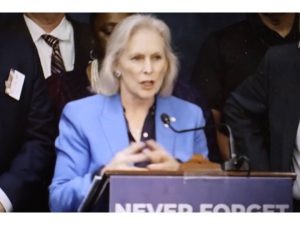
GILLIBRAND STATEMENT ON INFLATION NUMBERS
Washington, DC – Today, in response to the newly released December Consumer Price Index report and inflation numbers indicating that American families are paying 2.7% more than last year under Trump’s economy, Senator Kirsten Gillibrand issues the following statement:
“Candidate Trump promised over and over again in 2024 to ‘end inflation.’ He boasted that if he won, ‘prices will come down,’ he would ‘drive prices down,’ ‘groceries will be cheaper,’ and ‘we will be slashing energy and electricity prices by half within 12 months.’
“As president, he has called affordability a ‘hoax,’ claimed ‘inflation is stopped,’ and told Americans ‘don’t be dramatic’ about higher costs because of his policies.
“Nearly a year into his administration, President Trump has broken his promise and dismissed Americans’ concerns. Costs aren’t down, they are up — and American families are paying the price.”

JANUARY 13 — AMERICA’S HEALTH DEFENSES WEAKENED BY NEW POLICIES: YOUR LOCAL EPIDEMIOLOGIST
Enjoying this newsletter? Why not share it with a friend? A brutal flu season, new dietary guidelines, and why cancer screenings are at riskThe Dose (January 13)
I (Katelyn) have temporarily escaped to the Amazon jungle, where the internet cannot even reach me. So this week, I left the YLE keys with my team and our good friend—and scientific communication rockstar—Jess Steier. You’re in good hands. Jess, take it away… Hello YLE readers! I’m Jess Steier, public health scientist and founder of Unbiased Science, stepping in while Katelyn is on a much-deserved vacation. (During brief periods of WiFi connectivity, she’s sending pics that have me very jealous.) What a week to guest-host: flu season is brutal, the new dietary guidelines are… interesting, the policy landscape is shifting fast, and the annual reader survey needs your feedback. Let’s get into it. Infectious disease “weather report”Flu. Buckle up, folks. We’re in the thick of a very rough flu season. The CDC tracks “influenza-like illness” (ILI)—doctor visits for fever, cough, and sore throat—as a proxy for respiratory virus activity. Most of those cases right now are flu. ILI is the highest it has been since 1997-98 (nearly 30 years), and the highest on record since the CDC started tracking. Last season, infections peaked at the beginning of February, and we’re already seeing similar rates a month earlier this year. And infections will continue to increase, since they haven’t peaked yet.
Source: ILINet. Annotations by YLE. Emergency department visits are highest among kids ages 5-17, with children under 5 close behind. Seventeen children have died from the flu so far this season. For context, last year set the record for pediatric flu deaths (280). Looking at this horrible season, we might see similar rates this year, unless uptake of the flu shot—which greatly reduces the risk of hospitalization and death—catches up.
Source: CDC FluView. Annotations by YLE. Subclade K, the latest offshoot of H3N2 (type A)—basically a slightly updated version of the virus we already know—emerged over the summer and is to blame here. It’s better at evading this season’s flu shot and prior immunity. It has accounted for roughly 80% of flu samples tested so far. What this means for you: The best thing you can do is get a flu shot, and make sure everyone in your family 6 months and older has received one. It’s not too late.
Measles. The U.S. has confirmed over 2,200 cases and 3 deaths this season—the highest annual total since 1992. Two major outbreaks are driving the surge: South Carolina (313 cases, with 125 added last week alone) has now spread to North Carolina and Ohio, and the Utah-Arizona outbreak continues to grow (nearly 400 cases combined). For latest full Yale School of Public Health SITREP report, go here:
The big question is whether the U.S. will lose its measles elimination status, which we’ve held since 2000. Canada lost theirs in November. If ongoing outbreaks are linked to the Texas outbreak that started last January—meaning continuous transmission for 12 months—we could be next. The Pan-American Health Organization — our regional version of WHO—is set to evaluate U.S. data soon. Some good news: Covid-19 rates remain low nationwide, and common cold viruses (like rhinoviruses and seasonal coronaviruses) are down. RSV cases are lower than this time last year but starting to rise. New Dietary Guidelines: MyPlate is out, the inverted food pyramid is inI’ll let Megan, YLE’s registered dietitian nutritionist, take it from here… Last week, the United States Department of Agriculture (USDA) and HHS released the Dietary Guidelines for Americans (DGA). The DGA are updated every five years to guide nutrition policy, education, and programming for health professionals. While some federally funded programs like school meals must follow them, others use them as best-practice guidance. As an RDN, I reference the DGA often in my work. Historically, the DGA has aligned with its Scientific Report—a public, multi-year evidence review by an independent advisory committee. This cycle, the DGA diverged from that report (released in 2024), openly criticized it, and introduced a separate Scientific Foundation developed privately by contracted scientists. Reactions to the new DGA vary widely, including praise for its emphasis on “real” whole foods, confusion over vague or conflicting messaging, and concerns about its propaganda-like language, questionable scientific rigor, and opacity in the review process and author selection. Notable takeaways include:
Source: https://cdn.realfood.gov/DGA.pdf How will these changes affect daily life for most folks? For many adults, not much. Most Americans don’t follow the guidelines anyway. Still, the DGA shapes guidance for federal nutrition programs, such as school meals and nutrition assistance programs, which serve at least 1 in 4 Americans, and informs recommendations from health professionals. That’s why its clarity and scientific integrity remain important for both individuals and public health. Would a deeper dive into the new guidelines be useful? If so, what questions do you have for us? Let us know in the comments. With more Medicaid eligibility requirements, more missed cancer screeningsThe “Big Beautiful Bill” changed Medicaid eligibility, adding new work and renewal requirements. When they go into effect in January 2027, they will affect care in a myriad of ways, including cancer prevention. An analysis published in the Journal of the American Medical Association (JAMA) last week predicted that, due to losing Medicaid coverage, millions of people will lose access to cancer screenings. Their projections? More than one million missed screenings in the next two years, resulting in 155 preventable deaths. This study focused on implications for breast, colorectal, and lung cancers, all of which have shown increased survivorship after widespread screening implementation. This estimate is conservative; for example, it does not include recommended cervical cancer screening. There will also be significant variation across states: in states that expanded Medicaid (where a larger fraction of the population is covered), more screenings will be missed. Bottom line: This is just one direct health impact for those who will lose Medicaid coverage next year.
HRSA endorsed an at-home HPV self-collection testI unfortunately have had the experience of a super uncomfortable, borderline painful, hastily accomplished Pap smear. I get it: as an important cervical cancer prevention tool, we’ve needed them. But like many of the other women in my life, I dread them. Enter the at-home human papillomavirus (HPV) self-collection test. We can collect our own samples using at-home kits, and they are now FDA approved as a cancer screening tool in Health Resources and Services Administration (HRSA) guidelines. The at-home kits are less invasive, involve less equipment, don’t require a trip to the clinic, and are a welcome alternative for people who have experienced sexual trauma. The U.S. Preventive Services Task Force (USPSTF) first endorsed self-collection swabs for clinical use back in 2024. They were then available through prescription only in May 2025. These updated guidelines reflect additional data that vet how they can be reliably used to test for HPV, the infection that causes the majority of cervical cancers, and expands access without prescriptions. For context, the HRSA recommends that women aged 30 to 65 at average risk of cervical cancer get screened with HPV testing—now including at-home tests—every five years, and women aged 21 to 29 at average risk get a Pap smear every three years. (The American Cancer Society (ACS) guidelines recommend beginning to test for HPV at 25 years.) This at-home test aims to increase screening rates: an estimated 1 in 4 adults are not up to date with cervical cancer screenings. This brings us to some nuance:
If you want to try this option:
Good news
In case you missed it
That’s it for this week! Love, Jess Jess Steier, PhD, is a public health scientist and founder of Unbiased Science. Megan Maisano, MS, RDN, is a registered dietitian nutritionist. During the day, Megan works at National Dairy Council, a non-profit dairy nutrition research and education organization. (She does not write about the dairy industry for YLE.) Hannah Totte, MPH, is an epidemiologist and YLE Community Manager. Your Local Epidemiologist (YLE) is founded and operated by Dr. Katelyn Jetelina, MPH PhD—an epidemiologist, wife. YLE reaches more than 425,000 people in over 132 countries with one goal: “Translate” the ever-evolving public health science so that people will be well-equipped to make evidence-based decisions. This newsletter is free to everyone, thanks to the generous support of fellow YLE community members. To support the effort, subscribe or upgrade below: Your Local Epidemiologist is a reader-supported publication. To receive new posts and support my work, consider becoming a free or paid subscriber.
|
||||||||||||||||||||||||||||||||||||||||||||||||||||||


