Hits: 376

RAINBOW OVER WHITE PLAINS NEW YORK USA AFTER A THUNDER STORM GRUMBLED AT 6 PM EDT

RAIN FROM THE MILD THUNDERCELL A HARBINGER OF A SUMMER TO COME
Hits: 376
RAINBOW OVER WHITE PLAINS NEW YORK USA AFTER A THUNDER STORM GRUMBLED AT 6 PM EDT
RAIN FROM THE MILD THUNDERCELL A HARBINGER OF A SUMMER TO COME
Hits: 436
|
Welcome to the Northeastern edition of Outbreak Outlook! It is only available to paid subscribers. If you wish to become a paid subscriber and access region-specific information, please click the Subscribe now button below. Thanks for reading! -Caitlin
Flu season continues to wind down. Things have really quieted down with influenza in the Northeast. Most states are now well below the national baseline of 2.9% of outpatient visits for ILI that roughly marks the end of flu season.

Only New Jersey remains above it, at 3.4%; its numbers declined this week and I expect them to continue to decline over the next few weeks.

Emergency department visits for influenza have reached near-zero levels, with all states reporting that <1% of ED visits are for flu. Hospitalizations continue to decline as well, and are hovering between 1 and 2 admissions per 100,000 population across the region. As we enter summer, I expect to see these rates to get at or near zero (that is, <1).
Very quiet week for Covid-19. Wastewater concentrations are minimal in the Northeast. Visits to the emergency room for Covid-19 are extremely low across the Northeast: every state is reporting that <0.4% of ED visits were for Covid.

Hospitalizations are continuing to decline in the Northeast, and there are now 2 or fewer new admissions per 100,000 population in every state in the region. Rhode Island and Maine both reported slight upticks, but their rates remain <2.

Note: The x axis in the plot above is quite stretched out. Updated visualization for this newsletter is on my roadmap.
Test positivity for norovirus declined slightly this past week, but remains quite elevated. Late spring is when we tend to see a sharp drop-off in stomach bugs, so hopefully any week now I will have better news.

The following foods are being recalled because they are contaminated. Please check your cupboards and throw out any of these items:
New
Previously reported:
 |
Hits: 395
Hits: 490
WPCNR LAW JOURNAL. News & Comment By John F. Bailey. April 28, 2024:
In the 6th and 5th Century B.C in ancient Greece where intellectual thought and philosophy began there was a movement that rose among intellectuals , now what we’d call a fad that challenged the standards of education and moral codes and behaviors of the philosophers of the time. It was a group of new teachers of youth and adult leadership that challenged standards of the time.
They were known as “The Sophists”.
Wikipedia describes them from the Stanford Encyclopedia of Philosophy defining and describing who and what they were as chronicled by Plato in the Plato dialogues and the Sophists’ roles in government :
“The major sophists were considerable celebrities, and were active in public affairs.
The Protagoras (dialogue) captures the excitement which they engendered on arriving in a city, the cosmopolitan clientele who accompanied them and their associations with the rich and powerful.
Some made a great deal of money; Hippias boasts (Greater Hippias 282e) of making, in a single visit to Sicily, more than a hundred and fifty minas, i.e., fifteen thousand drachmas, something in the region of thirty years’ wages for a skilled craftsman, and Socrates says (Meno 91d) that Protagoras earned more than ten sculptors, including the celebrated Phidias.
Protagoras drew up the law-code for the foundation of the Athenian colony of Thurii in 444/3 (Diogenes Laertius IX.50), and Gorgias, Hippias, Prodicus and possibly also Thrasymachus acted as diplomatic representatives of their respective cities.
But their wealth and celebrity status has to be set against the negative reaction they aroused in those of conservative views, e.g. Anytus in Meno 89e–94e, who saw them (to a considerable extent unfairly, as we have seen) as subversive of morality and religion and a bad influence on the young.
According to Plato in the Apology, it was that climate of opinion, most strikingly expressed in Aristophanes’ Clouds, which had led eventually to the condemnation of Socrates on grounds of irreligion and the corruption of the young.
Consequently, his rehabilitation of Socrates leads him to contrast the genuine philosopher with the sophists, whom he depicts predominantly as charlatans.
That hostile portrait was the historical foundation of the conception of the sophist as a dishonest argumentative trickster, a conception which remains the primary sense of the word in modern usage, but which considerably distorts what can be recovered of the historical reality.”
I was struck by the similarity of the philosophy judges of today appointed to courts recommended by think tanks who have held the politicians attention and advised them over the last 25 years and more specifically during the Trump administration.
Those conservative judges in Federal Courts and state courts, and of course the Supreme Court now are creating their own philosophy of law based on the original constitution, heavily influenced by who appoints them, who is on trial, and “what if” defenses creatively invented by legal counsel of conservative philosophy convincing judges, (not all) to make decisions on up through the structure of the courts that turn “wrongs” into “rights,” “fraud” into “business practices,” “legal procedures” into “violations of rights,” offering differences of interpretation into “violation of rights.”
The Supreme Court pre-decision thoughts, after arguments this week (not yet a written decision on this matter), on former President Trump’s immunity from prosecution, are chilling.
If a President is totally immune for prosecution while he or she is President, then he or she can order people to be murdered while President who might be enemies, journalists, editors, members of congress, or prosecuted, or remove Supreme Court justices.
If a president is immune from being prosecuted for anything done while he or she is out of office, then he or she can not be prosecuted for any crimes or misdemeanors. It could be quite convenient for an ex-President to kill his wife rather then give her a divorce because he did not want to give her a settlement, like Henry the 8th did while he was King of England.
This will be a very interesting decision when it is finally released. Will they set conditions when the President is not immune, like a murder, for example?
When the President is out of office on his own time, receiving Presidential pension and health care from the government, will they still be subject to prosecution for fraud, insurrection? (But of course, storming a building is not insurrection, far from it, of course.)
However a great expansion of the impact of whatever decision guidelines on Presidential immunity the Supreme court creates, opens new legal avenues for defense lawyers of the rich, the poor, the minorities, alike. This will happen under the “all men are created equal” words in the constitution. If the President is now above the law by the as yet not unveiled decision pre-release, is this not a violation and applies to all men?
Women.
Liisten. if the President is immune from prosecution, does this mean only men have equal rights under the law and women cannot sue for sexual misconduct, the right for abortion permission, rape, etc. This will be the longest decision by a Supreme Court in history. They have to say “men and women are equal under the law.”
The court decisions so far have been historically impacting. The decision that corporations are people and can create Political Action Committees. The elimination of class action suits. The abortion decision ignoring existing law, inflicting personal beliefs on “the pursuit of happiness.’
Why do I think the Supreme Court is “The Sophist” Court?”
They were appointed for their beliefs and decisions they made in the past to pursue a policy not their beliefs in right and wrong, which they failed to declare.
They were were unduly influenced by their personal beliefs. I remember Judge Francis Nicolai in White Plains Supreme Court in the Hockley-Delgado election case, pointing to the black sleeve of his robe and saying, “I wear these robes to right wrongs.” The judges on the court may believe they are right wrongs, when in reality they are encouraging new laws to prosecute women who try to travel and medicate to have abortions, creating greater wrongs against women.
They do not have good reasoning powers. They like the Sophists base it on their personal beliefs not what the effects their beliefs have on people affected by their decision. They do not have wisdom.
They have abandoned their loyalty to the people of this nation, to reward the powers that appointed them, especially in delaying the trial of the former President until after the election. This is self-serving to their own interests. A judge should be indifferent to self-interest. A favorable ruling on Presidential immunity, I might add means nothing a President does is wrong. He could remove the Liberal Justices by Executive Order for example.
Sophists think, as Plato and Socrates pointed out are not Guardians of the People, they believe in their philosophies first and foremost and that they are right always.
Hits: 186
WHITE PLAINS RAISES BUDGET 5.45% TO $212.3 MILLION. $10.8 MILLION INCREASE
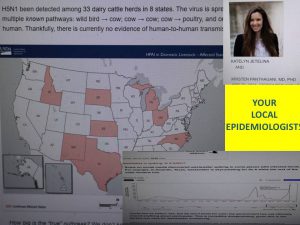
BIRD FLU REPORT–BIG CASES IN 8 STATES. LITTLE INFORMATION

BOWMAN BATTLES BACK IN THE 16TH CONGRESSIONAL DISTRICT
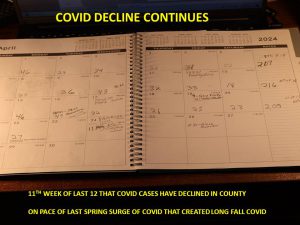
COVID WAITING FOR THE SUMMER
THE SCHOOL BUDGET

MAKING GERMANY GREAT AGAIN: HOW HITLER ELIMINATED DEMOCRACY IN 1932 A MUST READ BEFORE YOU VOTE.

Hits: 447


H5N1—also known as bird flu—continues to spread among animals and, for the first time, is spreading among cows.
Thankfully, the risk to the public is low, but the more the virus spreads, the more chances it has to mutate and jump species to spread among humans. Given H5N1’s high mortality rate, we don’t want this to happen.
This outbreak is concerning; unfortunately, communication and data transparency have been profoundly lacking. We must do better and faster — repeating the same communication mistakes that fueled confusion, distrust, and misinformation during Covid-19 is inexcusable.
Here’s what we do and don’t know about H5N1.
This post builds off previous YLE updates of the current cow outbreak. To get up to speed, start here.
H5N1 been detected among 33 dairy cattle herds in 8 states. The virus is spreading through multiple known pathways: wild bird → cow; cow → cow; cow → poultry, and once from cow → human. Thankfully, there is currently no evidence of human-to-human transmission.

How big is the “true” outbreak? We don’t know.
Symptomatic testing of animals and humans is voluntary, and asymptomatic testing is not happening (likely due to industry pressure), which means we are flying blind.
It’s been reported that more workers have symptoms — such as fever, cough, and lethargy — but are unwilling to test. We could have more human cases. Among the tests conducted, it’s unclear how many have been done, how many were positive, and how many humans have been exposed.
Two positive updates:
We don’t know how big the outbreak is from physically swabbing animals and humans, but two clues suggest this has been spreading under our noses for a while:

Some on social media discovered wastewater spiking in some places with infected herds. For example, in Amarillo, Texas, wastewater is skyrocketing for flu A while the rest of the state remains low.

Could this be H5N1? Yes, but we don’t know for sure; the government has not officially shared anything about wastewater. This is incredibly disappointing, given this is the perfect use case for wastewater monitoring.
While we don’t have a wastewater test for H5N1 yet, it has many similarities to flu strain A.
Some wastewater systems include human wastewater and stormwater. Given that Amarillo has stockyards, this strengthens the possibility that it’s H5N1, especially since we aren’t seeing it in other parts of the state. The most likely scenario? The spike is from milk dumping or animal sewage. We need more data.
The U.S. government has confirmed that Tamiflu and the stockpiled H5N1 vaccines are predicted to have efficacy if this does move to humans. This is great news. And I agree there shouldn’t be panic. But I caution leaders against the “we’re fine, we have vaccines” attitude.
Of course, fully relying on vaccines and overconfidence were among the big mistakes of the Covid-19 emergency. As one of our colleagues wrote, “It’s best to face these threats with humility and determination.”
Information from the response has not been easy to find, has not been complete, and has not been backed with data, leaving many of us to piece together a fuzzy picture.
This is a big problem for many reasons:
We need a coordinated response from our government. Yes, there are multiple players involved. And yes, they have their own priorities, legal authorities, agility, experience, and politics. However, honest, frequent, direct communication earns the public’s trust and confidence. If not, communities are starved for good information during outbreaks or emergencies, leading to unnecessary anxiety, confusion, and frustration.
After much pressure, government agencies finally hosted a live briefing for the media yesterday. This is a positive step in the right direction and, I hope, a sign that the winds are changing.
Responses need to get better faster. H5N1 is a dangerous disease that can affect our economy, food security, and animal and human health. This response has been incredibly difficult to watch on the heels of Covid-19 (and mpox and other emergencies like the East Palestine train accident). We get just so many “practice runs” before it starts costing lives again.
Love, YLE and Dr. P
“Your Local Epidemiologist (YLE)” is written and founded by Dr. Katelyn Jetelina, M.P.H. Ph.D.—an epidemiologist, wife. During the day, she is a senior scientific consultant to several organizations, including CDC. At night, she writes this newsletter. Her main goal is to “translate” the ever-evolving public health world so that people will be well-equipped to make evidence-based decisions. This newsletter is free, thanks to the generous support of fellow YLE community members. To support this effort, subscribe below:
Kristen Panthagani, MD, PhD, is a resident physician and Yale Emergency Scholar, completing a combined Emergency Medicine residency and research fellowship focusing on health literacy and communication. You can find her on Threads, Instagram, or subscribe to her website here. Views expressed belong to Dr. P, not her employer.
Hits: 666
BUDGET SUMMARY FROM JAMES ARNETT ISSUED THIS WEEK
A property tax levy increase of 1.37% which is under the NYS Property Tax Cap limit for the 2024-2025
Fiscal Year;
A property tax rate of $244.18 per $1,000 taxable assessed valuation, which is 2.47% more than the 2023-
2024 tax rate of $238.29.
For a residential home with a median assessed value of $13,500, this would
yield an increase in City property taxes of $80 annually;
Appropriations of $212.3 million, $10.8 million (5.4%) more than the 2023-2024 Adopted Budget of $201.5
million;
Debt proceeds are not used as a financing source for tax certiorari or pension amortization;
$16.0 million is appropriated from the various components of fund balance, which is $2.3 million more than
was appropriated in the 2023-2024 Adopted Budget;
Taxable assessed valuation of $278.5 million, a decrease of $3.0 million from the assessed valuation from
the prior year;
A continuation of hiring restrictions where possible.
This is the thirteenth fiscal year that we developed an annual budget in accordance with a real property tax levy
cap (“tax cap”) mandated by Chapter 97 of the New York State Laws of 2011. In all thirteen years, the city has
met this tax cap limit and has not once required an override of the cap. This law limits the real property tax levy
increase over the prior year’s levy by not more than two percent (2%) or the rate of inflation, whichever is less,
plus or minus other adjustments. The rate of inflation utilized by the State for the City’s 2024-2025 fiscal year
was 2.0%.
In addition to the inflation rate, the tax cap formula also includes adjustments to the maximum
allowed levy for special assessments (such as Business Improvement District assessments), a tax based
growth factor provided by the State (such as new construction), certain increases in pension costs (also
provided by the State) and judgments or court orders related to tort actions (tax certiorari are not considered to
be tort actions).
When compared to the current year, the 2024-2025 proposed real property tax levy is
increasing by 1.37%.
The levy as proposed is actually $1,646,581 less than the maximum increase allowed by
the NYS tax cap formula and allows the City to maintain a rollover amount to be used in future budget years.
The real property tax levy of $68.0 million represents 32% of total General Fund revenues and other resources.
Over the past several years, the City has made significant strides in addressing the expenditure side of the
equation. One initiative undertaken by the City has been a “green initiative” to convert less efficient, older
technology lighting over to LED lighting.
In cooperation with the New York State Power Authority (NYPA), the City has converted street lighting to LED lighting and has also installed LED lighting in certain City parking garages and facilities as well as at Delfino Park and City Hall.
The City is now, with the help of a NYS grant, converting the lighting in the White Plains Library to continue this initiative. As utility prices rise, the cost savings aspect of this initiative becomes even more important. This and other “green initiatives” are constantly being looked at as ways to help both the environment and the City Budget.
A second initiative is one in which the City has entered into a 25-year agreement to lease property for solar development. Through this contract, solar energy systems have been installed at eight City-owned facilities and benefit both the City and its residents in addition to helping to preserve the environment. The City should realize approximately $936,464 in the upcoming year with these systems now fully online.
Some more recent initiatives undertaken by the city are the completion of the Battle Hill Pollinator Habitat,
which serves as a shelter and habitat for butterflies, moths and hummingbirds and boasts an impressive array
of native plants. The city’s in-house food waste composting program reduces waste and creates high quality
compost. This compost is then available to be used throughout the city and is distributed to city residents at no
cost. The city has continued to expand its electric fleet, including the ordering of an electric garbage truck which
is expected to be received by the end of the year. The city has also increased its focus on beautifying the
downtown area with additional code enforcement, additional staff to keep the downtown clean of graffiti, lantern
flies and other eyesores and to perform additional maintenance and repairs as needed and continuing the
annual Holiday lighting display.
In spite of the challenge of keeping property tax increases to a minimum, the City continues to provide superior
services to our residents and maintain its infrastructure in peak condition. The 2024-2025 Proposed Budget
includes amounts necessary to fund salaries, benefits, debt service and other costs in accordance with current
contractual or legal requirements. Taxes levied on behalf of the Business Improvement District (B.I.D.) remain
at $900,000.
The City is using its bonding authority to address capital needs where appropriate. Recent increases in interest
rates are expected to put additional stress on the City’s budget in future years. Where prudent, the City has
recently paid for certain Capital Projects with cash instead of bonds. This practice is likely to continue as rates
remain high.
Even with close attention paid to cost control measures by departments in the current and prior
years, and in planning for next year, inflation has led to a 5.4% increase in operating costs when compared to
the 2023-2024 Adopted Budget.
In addition to continued increases in utilities, an increase in the health insurance rates charged by NYS for employees and retirees and pension related expenses also charged by the State as well as approved union contract salary increases are playing a large role in this increase.
The total 2024-2025 Proposed Budget for the Library Fund is $7.4 million, an increase of $253,693 over the
previous year. Property taxes raised through the General Fund will provide $7.1 million (97%) of the funding
needed for Library operations.
The 2024-2025 Proposed Budget of $15.4 million for the Debt Service Fund is $.5 million more than the amount
in the 2023-2024 Adopted Budget. The impact of rising interest rates isn’t expected to be seen until the 2025-
2026 Budget, which will include debt service expenses associated with the upcoming April 2024 bond sale.
The 2024-2025 Proposed Budget provides $11.3 million for the payment of principal and $4.1 million for the
payment of interest on general long-term debt. Transfers in from the General Fund and Library Fund of $14.0
million and $0.6 million, respectively, together with a $650,000 appropriation of fund balance and a subsidy of
$136,648 from the New York State Environmental Facilities Corporation (EFC) provide the resources for these
payments.
Including depreciation (a non-cash expense) of $1.7 million, the 2024-2025 Water Fund Proposed Budget
provides for $19.9 million of expenses. Included within these expenses is $0.9 million for capital improvements
or emergency repairs. Expenses in the Water Fund are fully covered by revenue from user charges and other
revenues.
The 2024-2025 Sewer Rent Fund Proposed Budget provides for $4.0 million of expenses, including
depreciation in the amount of $.5 million. Funding is provided for $525,000 in capital improvements or any
needed emergency repairs. Revenues from user charges of $3.3 million as well as other miscellaneous
revenues fund the entire $4.0 million of expenses. The sewer rent surcharge that the City bills residents and
businesses is 18% of the total water bill.
The 2024-2025 Proposed Budget of $6.1 million for the Self Insurance Fund covers current operating costs
needed during the fiscal year for the City’s risk management and insurance program. These costs are charged
back to the other funds of the City through interfund charges.
KEY REVENUE SOURCES
The City’s portion of the total sales tax rate (8.375%) is 2.5%. This 2.5% is comprised of a 1.5% unrestricted
amount, a 0.75% unrestricted amount and a 0.25% amount that was converted from restricted to unrestricted in
2023. While the 1.5% component is permanent, the 0.75% and 0.25% components need to be renewed every
two years. They are currently due to expire on August 31, 2025.
The previously restricted component, mentioned above, was required by New York State to be deposited into a Contingency and Tax Stabilization Fund. While the restriction was removed for new receipts, the requirement to follow the rules set forth by NYS Law restricting the uses for the monies already in that fund remains.
For the current year, the City estimates that sales tax collections will total $56.3 million, which is slightly less
than what was received in the prior year, but more than the current year’s budgeted amount of $54.4 million.
Sales tax revenues seem to have increased significantly in the past few years due to a strong economy,
inflation and the enhanced State collection of internet sales taxes, but now seem to have leveled off.
In the fiscal year 2024-2025 proposed budget, sales tax revenue is proposed at $56.0 million, which is $1.6 million
more than budgeted in the current year. Going forward, the addition of retail and residential units in the City,
which is now underway, should provide new retail purchases which will also help to strengthen the sales tax
revenues.
Parking related revenues of $29.2 million, including meter fees, parking related fines, red light fines, and permit
charges, represent 13.7% of total General Fund revenues and other resources. Parking revenues fund the total
cost of operating and maintaining parking facilities and help support the costs of services provided to nonresidents visiting or doing business in the City.
As more and more people came back to the City to work and shop after the Covid pandemic, these revenues have increased and are now nearing those pre-pandemic levels. A parking rate increase was approved by the Common Council at the December 2023 Council Meeting for certain parking related fees and fines. The additional revenue related to these increases reduces thereliance on property taxes to fund vital City services including current and future maintenance of our aging parking system.
The 2024-2025 Proposed Budget includes Intergovernmental Grants and Aid of $7.7 million representing 3.6%
of total General Fund revenues and other resources. Revenue from the New York State Aid and Incentives to
Municipalities (AIM) program is proposed in this category at $5.5 million. Local Municipalities have lobbied the
State to increase this funding which has not increased in over a decade and there is hope that this could be
increased at some point in the future.
In the 2024-2025 Proposed Budget the amount of unassigned fund balance appropriated is $14.2 million. This
amount is $2.3 million more than was appropriated in the 2023-2024 Adopted Budget. An appropriation of $1.7
million from the fund balance committed to tax certiorari is also included. There is no appropriation from the
City of White Plains
Contingency and Tax Stabilization Reserve in the 2024-2025 Proposed Budget, although those funds have
been used recently and likely will be used again to fund certain Capital Projects where selling bonds was not
the best choice due to the specifics of those particular projects.
THE FUTURE
The objectives of this and every budget are to contain costs, to seek reasonable and responsible increases or
new forms of revenue and to ensure that our fiscal performance goals meet or exceed best practices. We strive
to achieve the alignment of revenues with activities generating costs to alleviate to the extent possible the
burden on our taxpayers.
We affirm our commitment to maintain and replace our capital assets in a manner that spreads the costs
appropriately over the life of those assets and to those receiving the benefits produced by those assets. This
includes responsible long-term planning for the acquisition, maintenance and disposal of assets and a judicious
funding blend of cash, debt and grants/aid.
The 2024-2025 Proposed Budget offers a plan for the delivery of needed and desired services that preserve our
quality of life while adhering to fiscal policies that will ensure retention of our coveted Aa1 credit rating. The
budget achieves these goals while remaining within the State mandated cap on the property tax levy.
Hits: 701
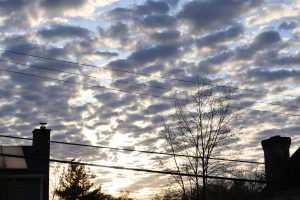
SUN RISE 6:30 A.M. WHITE PLAINS NY USA
Hits: 526
|
|||||||||||||||||||||||||||||||||||||||||||||||||||||||||||||||||||||||||||
|
|||||||||||||||||||||||||||||||||||||||||||||||||||||||||||||||||||||||||||
|
Hits: 163

There's a (moon out tonight) whoa-oh-oh ooh
Let's go strollin'
There's a (girl in my heart) whoa-oh-oh ooh
Whose heart I've stolen
There's a moon out tonight (whoa-oh-oh ooh)
Let's go strollin' through the park (ooh-ooh-ooh-ooh)

There's a (glow in my heart) whoa-oh-oh ooh
I never felt before
There's a (girl at my side) whoa-oh-oh ooh
That I adore
There's a glow in my heart I never felt before (ooh-ooh-ooh-ooh)

Oh darlin'
Where have you been?
I've been longin' for you all my life