
Hits: 193
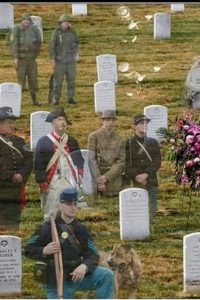
Wishing everyone a peaceful, fulfilling, and reflective Memorial Day .


I want to share two poems: “In Flanders Fields”, and “We Shall Keep The Faith “.  These two poems were born on the battlefield with death all around during The Great War or as we presently call it, World War I.
It is where the association of the wearing of the poppy originated. Please take a moment. Read this history and re-clean yourself with these two incredibly poignant poems.
It is Memorial Day weekend 2020. We all know that the wearing of poppies in honor of America’s war dead is traditionally done on Memorial Day. But what is the origin of the practice?
Most of us know the poem “In Flanders Fields” and we associate that poem with the wearing of the poppy and we associate the poem with Memorial Day.
What ties all these things together, and how many people know the ‘sequel’ to “In Flanders Fields”? Here is, in my view, the complete story.
This may take 4 minutes to read, but it is Memorial Day and if you want a solemn and poignant remembrance moment, this will qualify.
Here it is.
In war-torn battlefields of Belgium during The Great War (aka WW1), the red field poppy was one of the first plants to grow. Its seeds scattered in the wind and sat dormant in the ground, only germinating when the ground is disturbed – as it was by the very brutal fighting during World War I, particularly in the trench warfare in Belgium and France.
The practice of wearing of poppies was inspired by the poem In Flanders Fields, written in 1915 by Canadian soldier John McCrae. McCrae was a poet, physician, author, artist and soldier during World War I and a surgeon during the Second Battle of Ypres in Belgium in 1915.
McCrae’s friend Lt. Alexis Helmer was killed during the battle and his burial inspired the poem which was written on May 3, 1915. McCrae saw the poppies during burials around his artillery position. McCrae himself would later become a casualty while commanding a Canadian unit in early 1918.
As I mentioned, McCrae wrote “In Flanders Fields” after losing his friend, Helmer, on the operating table. He sat on a rock afterwards while he was resting and scribbled out the poem while viewing a spectacle of red poppies as he contemplated the loss of his friend and the tragedy that was this “Great War”. Legend further has it that fellow soldiers retrieved the poem after McCrae, initially dissatisfied with his work, discarded it.
Here now, the poem:
IN FLANDERS FIELDS by Lieutenant Colonel John McCrae (written in 1915)
In Flanders fields the poppies blow
Between the crosses, row on row,
That mark our place: and in the sky
The larks still bravely singing fly
Scarce heard amid the guns below.
We are the dead: Short days ago,
We lived, felt dawn, saw sunset glow,
Loved and were loved: and now we lie
In Flanders fields!
Take up our quarrel with the foe
To you, from failing hands, we throw
The torch: be yours to hold it high
If ye break faith with us who die,
We shall not sleep, though poppies grow
In Flanders fields
“In Flanders Fields” was first published on December 8, 1915 in the London-based magazine ‘Punch’.
The origin of the red poppy as a modern-day symbol of Memorial Day was the idea of an American woman, Moina Michael.
It was on a Saturday morning, while at work, two days before the World War I Armistice was declared. Michael was on duty at the YMCA Overseas War Secretaries’ headquarters in New York.
A young soldier passed by her desk and left a copy of the latest November edition of the Ladies Home Journal there. In it she came across a page which carried the poem entitled “We Shall Not Sleep”.
“We Shall Not Sleep” was sometimes used as the title for the poem “In Flanders Fields”, because McCrae never gave his poem a title.
Michael found herself transfixed by the last verse. She said she felt as though she was actually being called in person by the voices in McCrae’s poem which had been silenced by death.
She made a personal pledge to “keep the faith.” She vowed always to wear a red poppy of Flanders Fields as a sign of remembrance. Compelled to make a note of this pledge she scribbled down a response on the back of a used envelope.
She titled her poem “We Shall Keep the Faith”.
Michael then had the idea to create an emblem of Remembrance using the red Flanders poppy. At the age of 49, with a career in teaching for over 30 years already behind her, she decided to dedicate her life to campaign to have this emblem recognized by governments, veteran agencies and the public.
She continued with the project for the next 26 years until her death. She became affectionately known as the Poppy Lady.
Here now, her poem, a response to “In Flanders Fields”:
WE SHALL KEEP THE FAITH by Moina Belle Michael (Written in 1918)
Oh! you who sleep in Flanders Fields,
Sleep sweet – to rise anew!
We caught the torch you threw
And holding high, we keep the Faith
With All who died.
We cherish, too, the poppy red
That grows on fields where valor led;
It seems to signal to the skies
That blood of heroes never dies,
But lends a luster to the red
Of the flower that blooms above the dead
In Flanders Fields.
And now the Torch and Poppy Red
We wear in honor of our dead.
Fear not that ye have died for naught;
We’ll teach the lesson that ye wrought
In Flanders Fields.
I wish you all a meaningful, somber, reflective, and solemn Memorial Day!