Hits: 152
Si quiere leer la versión en español, pulse aquí. Covid summer and confusion, measles, cucumber recall, maternal health declining, and a curious MAHA reportThe Dose (June 2): This week in health
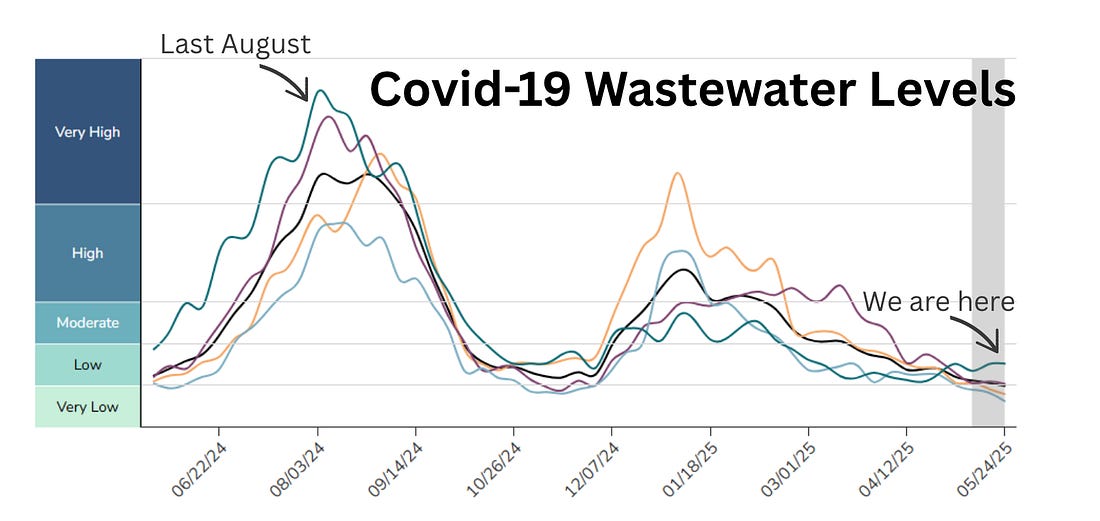
Happy June! We’re nearly halfway through the year. Phew. This week’s edition of The Dose is a bit packed—partly because we took last week off, and partly because, well, a lot is happening. We’re covering everything from Covid-19 (variants, summer wave concerns, and vaccine eligibility confusion) to a Salmonella outbreak tied to cucumbers, the MAHA report, and more. Covid-19: A summer wave brewing amid a ton of confusionA lot is happening in the Covid-19 world. Here are 4 updates for you: 1. Transmission and a summer wave. Covid-19 levels in the U.S. remain low—but if history is any guide, that may not last. We’ve seen waves every summer, and cases are rising in parts of the Western Pacific, Southeast Asia, and Eastern Mediterranean. Waves are started by a number of complex factors, including new variants. Last week, the WHO added a new strain, NB.1.8.1, to its variant monitoring watchlist. This variant is another descendant of Omicron. So far, it has a growth advantage of ~65% (compared to Omicron’s 500% advantage), which means it would cause a wave but not a tsunami. This may be the one that helps jump-start a summer wave. But while this variant has been detected in the U.S., it’s still at low levels. Time will tell.
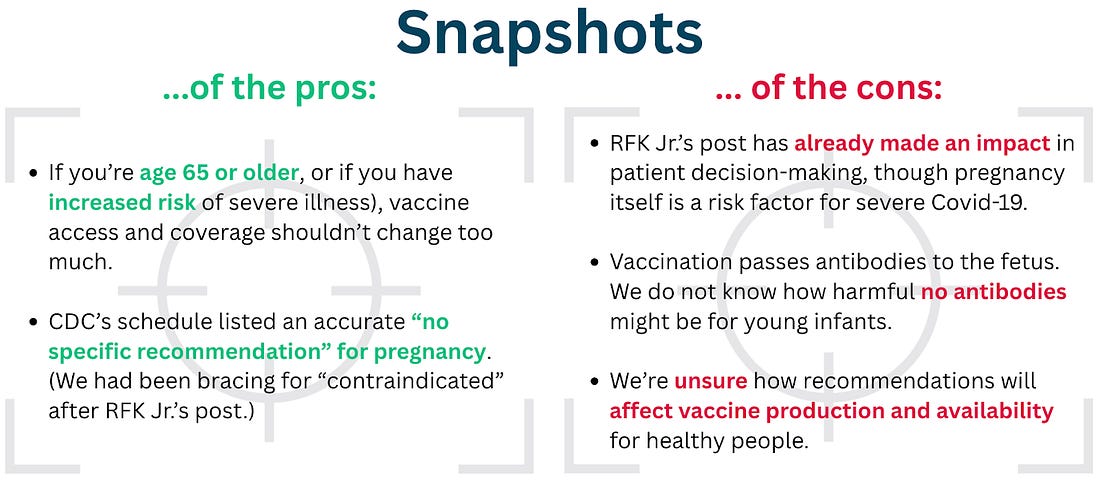
Figure from CDC; Annotated by YLE 2. Covid vaccine formula for this fall. Last week, the FDA’s vaccine advisory committee (VRBPAC) recommended not updating the Covid-19 vaccine strain for this fall. That means the same formula from last year will be used again. This aligns with the WHO’s recommendation: though the virus is still mutating, experts concluded the changes aren’t big enough to warrant a new formula yet. This is the first time we aren’t updating the vaccine for fall. 3. Eligibility for Covid-19 vaccines is a confusing mess from the political ping-pong match. At first, the political appointee to FDA said one thing in an opinion piece on NEJM, then RFK Jr. said another on X, then the CDC overrode (or negotiated, it’s unclear) what the policy should be by publishing the vaccine schedule. As of now:
Later this month, the official meeting of external expert advisors (ACIP) should clarify things when they meet as scheduled. But this isn’t guaranteed; RFK Jr. could cancel or delay their ability to do this at any moment. Out of all of this, my biggest concern remains: The damage is already done. A wave of confusion due to unilateral political decision-making instead of established evidence-based processes, resulting in whiplash headlines, likely hurts trust, sows immense confusion, and in turn, reduces vaccine uptake.
Figure by Your Local Epidemiologist 4. Some good news. FDA approved Moderna’s next-gen Covid-19 vaccine, with three improvements:
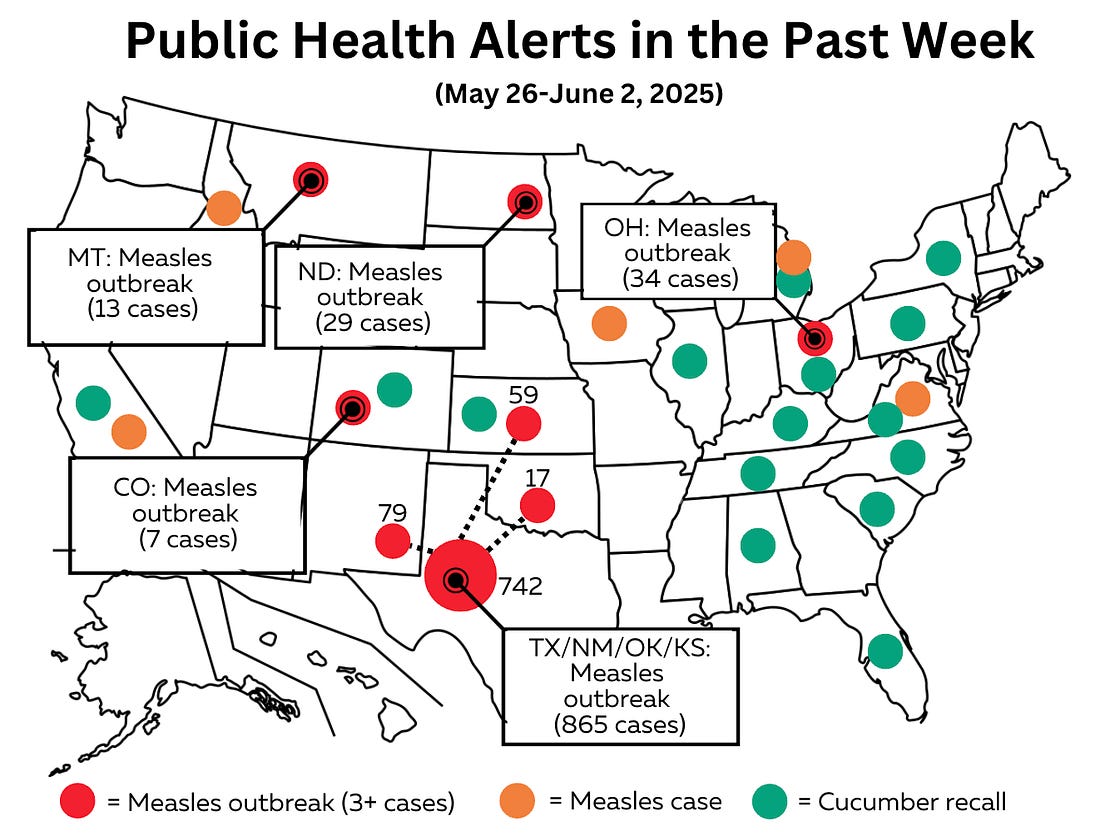
It’s unclear when this vaccine will become available because the CDC still needs to approve it. Quick measles updateAs of Friday, there are 1,132 confirmed measles cases in the U.S., compared to 1,856 in Mexico and 2,791 in Canada. West Texas remains the main hotspot, though growth has slowed. Small but growing outbreaks have also been reported in Montana, North Dakota, and Colorado (all currently under 50 cases). Check with local health departments for exposure info.
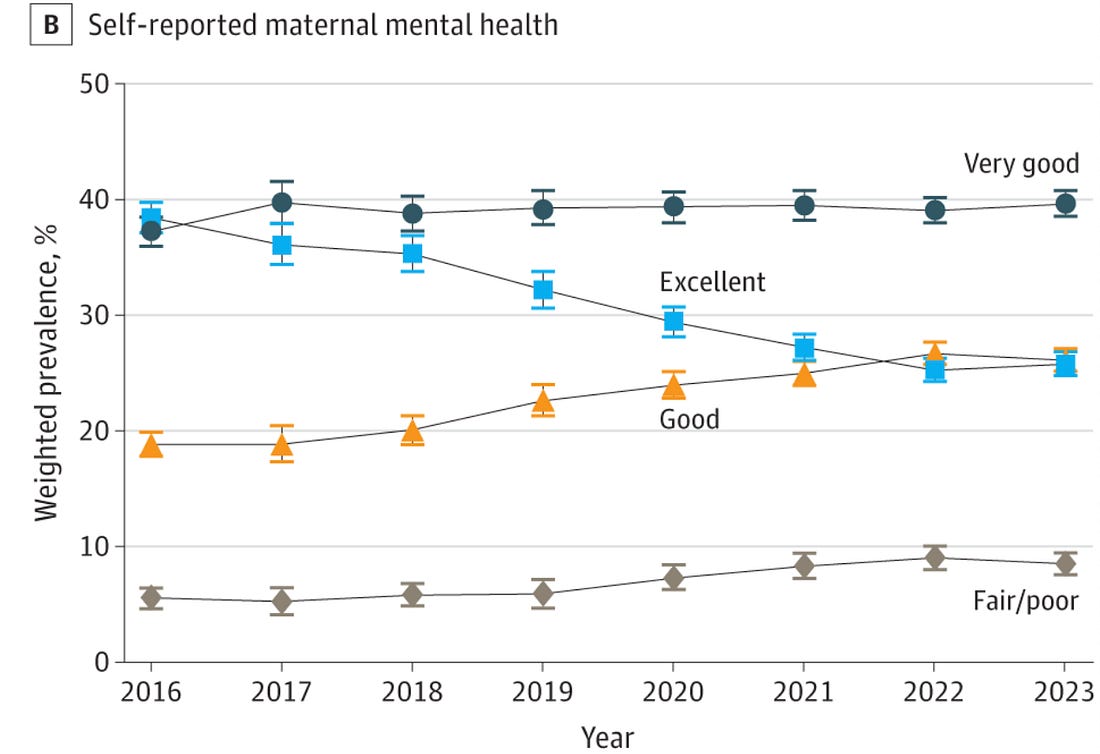
Figure by Your Local Epidemiologist Last week, CDC updated its travel warning, cautioning that “travelers can catch measles in many travel settings, including travel hubs such as airports and train stations, public transportation like airplanes and trains, tourist attractions, and large, crowded events.” If you’re fully vaccinated, you’re well protected. Not-so-cool cucumbers recalled for SalmonellaCucumbers across 18 states (see above in the map) were recalled due to Salmonella. Though this was listed on the FDA’s website, its usual alerts didn’t go out, which is unhelpful in empowering consumers to eat safe foods. Bedner Growers Inc. distributed affected cucumbers between April 29 and May 19. Sixteen people were hospitalized, and 45 people have been known to be infected so far. If you still have cucumbers in your fridge and don’t know their origin, toss them. The recalled cucumbers should now be off the shelves, so new ones are safe to buy. Women’s health: a mixed bagMental health declining: New data show worsening mental health among women—especially mothers.
Figure from Daw et al., JAMA Internal Medicine. Source here. It’s past time we started better supporting parents. A recent YLE deep dive identified several places we can start. A step forward in pain management: The American College of Obstetricians and Gynecologists announced its most recent consensus on pain management for in-office IUD procedures. Until now, patients were simply told to “take ibuprofen” for the often excruciating pain of cervical or uterine procedures like IUD insertions. Pain management has also been fraught with racist, misguided, and untrue assumptions that Black women feel less pain. The new guidelines:
What does it mean to you? If you’re preparing for a procedure, bring these guidelines with you to discuss options with your clinician. The MAHA report: what it got right—and missedOn May 22, the White House released the first Make America Healthy Again (MAHA) report—describing U.S. children as “the sickest generation in American history.” It focused on four main culprits: ultra-processed foods, environmental toxins, overuse of technology, and overmedicalization. This was a descriptive report. A strategy to tackle this is expected by August. What the report got right:
Some red flags:
Two big unanswered questions:
If we truly want to support the health of American children, we need to align science, policy, and regulations by investing in health research, nutrition programs, and agriculture. Bottom lineYou’re now caught up. We hope you get outside and enjoy some summer sunshine—and maybe even a little vacation. Love, the YLE team |