
Hits: 122
 |
Enjoying this newsletter? Why not share it with a friend?

In the summer of 2014, a California groundskeeper named Dewayne Johnson started noticing patches of raw, weeping skin spreading across his body. He had spent years applying Roundup, Monsanto’s glyphosate-based herbicide, for a school district, sometimes drenched in it when equipment malfunctioned. By 2014, he had a diagnosis: non-Hodgkin’s lymphoma. In 2018, a jury awarded him $289 million in damages, later reduced on appeal. Tens of thousands of lawsuits followed.
The story hasn’t quieted down. It’s all over the internet, swinging between “this will kill you, buy organic” and “relax, you’re fear-mongering.”
Some of that recent chatter stems from an Executive Order protecting glyphosate and its production, which set off intense infighting within the MAHA movement. Some of it reflects a deeper truth: Americans genuinely care about harmful chemicals in their environment (see poll below). And the conversation isn’t going anywhere, with a Supreme Court case involving Monsanto set for this April.
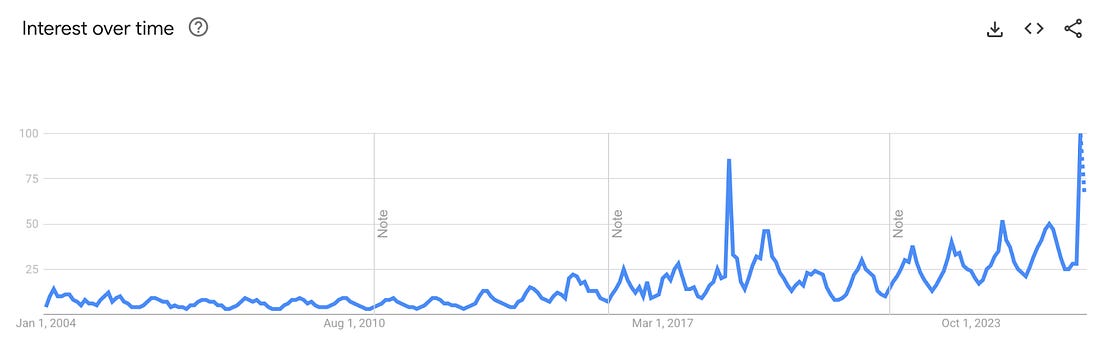 |
Americans googling “glyphosate” in the past 20 years, with a slow increase over time and, most recently, a large spike
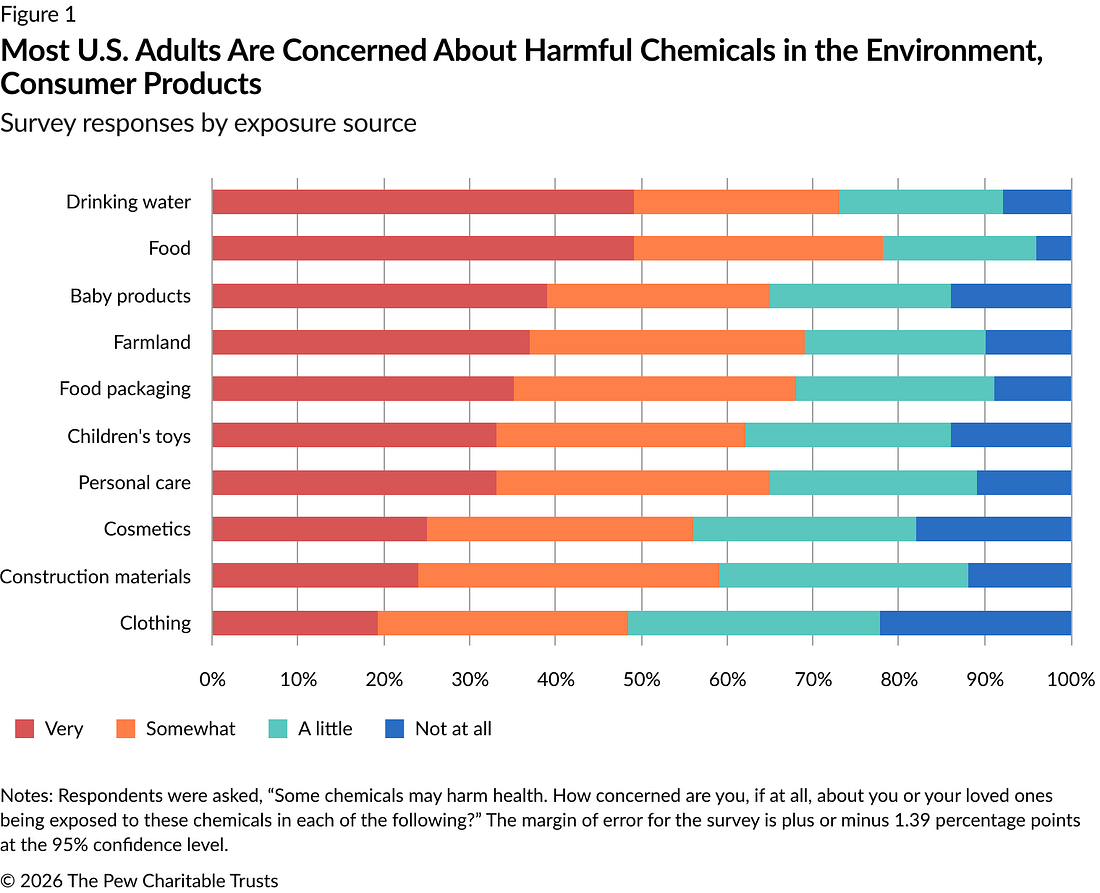 |
Source: Pew
Glyphosate (the active ingredient in Roundup) is one of the most widely used herbicides in the world. But does glyphosate cause cancer? And how much exposure is actually risky?
With so much mistrust in institutions and corporations (and some genuine conflicts of interest), making sense of the actual scientific evidence is genuinely hard. Here is a translation of what the scientific evidence actually says.
Does glyphosate cause harm?
Glyphosate is an herbicide that kills most plants it contacts rather than targeting specific species. It works by blocking an enzyme pathway (EPSPS) that plants and many microorganisms need to produce essential amino acids. Without those amino acids, the plant can’t grow and dies.
Glyphosate was first developed by Monsanto in the 1970s and became ubiquitous after the company introduced “Roundup Ready” crops in the 1990s. In 2024, Bayer removed glyphosate from residential Roundup-branded products due to litigation pressure. But today it is still the most widely used herbicide in the world. Farmers also discovered they could spray it directly on crops like oats, lentils, beans, and peas just before harvest to dry them out faster and make harvesting easier.
Because of its widespread use, it’s obviously really important to understand if it’s harmful to humans.
The key principle: The dose makes the poison
The most important concept in toxicology is that “the dose makes the poison.” Sixteenth-century physician Paracelsus articulated what remains the foundational principle of toxicology: sola dosis facit venenum. Water will kill you if you drink enough of it. Aspirin saves lives at 81 milligrams and causes internal bleeding at higher chronic doses.
So, at what dose is glyphosate poisonous? The LD50 in rats (the dose that kills half the test animals) is around 5,600 mg/kg body weight. Table salt is roughly 3,000 mg/kg. By that classic measure, glyphosate is less acutely toxic than salt.
But some people are exposed to a lot of glyphosate through their work. And among the general public, there are many questions about low-dose, cumulative exposure from multiple sources over long periods.
Does glyphosate cause health problems?
Cancer
Correlation maps are striking, with one analysis finding that 60% of counties that spray the most glyphosate have non-Hodgkin’s lymphoma rates above the national average. But correlation alone doesn’t establish cause, which is why animal and human studies matter.
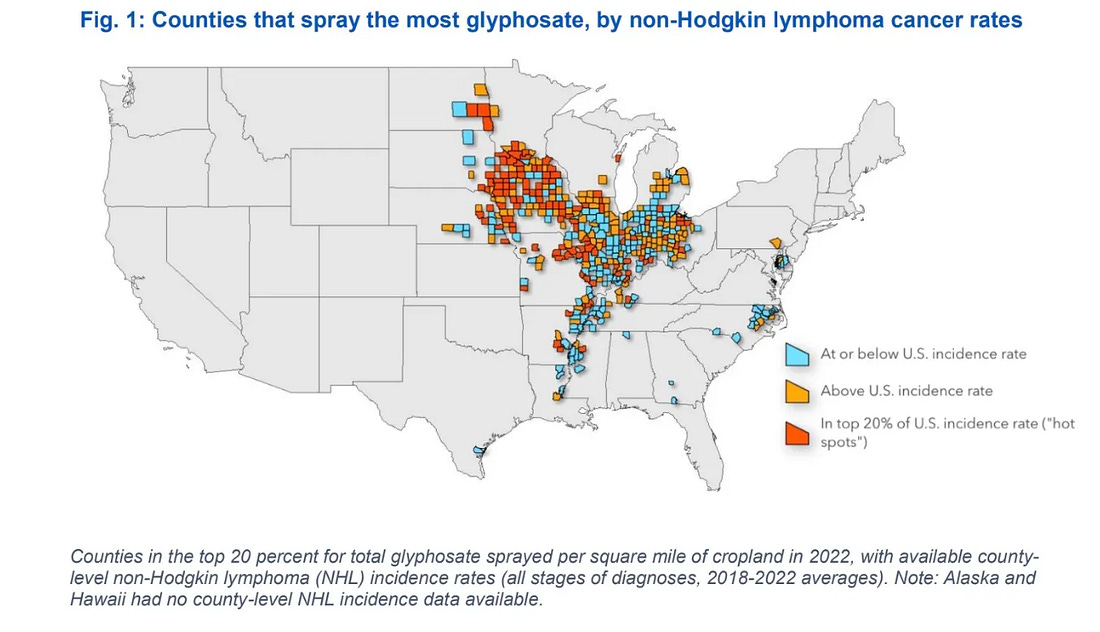 |
Map showing U.S. counties with high glyphosate application overlaid with county-level non-Hodgkin lymphoma incidence rates. Source: https://www.foodandwaterwatch.org/wp-content/uploads/2026/03/2603_RB_GlyphosateCancerClusters.pdf
- In animals: Rat studies are typically what most fear is rooted in, but most people don’t know the study details on the dosage given to rats. A pooled analysis of the 13 most rigorous rat studies found evidence that very high doses, around 55,000 times greater than typical food residue exposure, can cause certain cancers.
- In humans: One of the strongest studies followed 55,000 herbicide users over 20 years and found no overall increased cancer risk. There was one signal: among those with the highest use, rates of acute myeloid leukemia (AML) appeared elevated. A broader meta-analysis of 18 human studies also found no overall cancer risk, though a separate meta-analysis focused specifically on non-Hodgkin lymphoma found that people with high cumulative glyphosate exposure faced a 41% higher relative risk compared to those with low or no exposure.
These human studies are observational studies (randomized controlled trials would be unethical), and meta-analyses are only as reliable as the studies they pool. But the story seems consistent: at very high exposure levels, there may be some cancer risk. But that’s about as far as the science currently takes us.
Emerging research: gut and reproductive health
Gut: Because glyphosate targets a pathway that exists in some gut bacteria, scientists have questioned whether it could affect the microbiome. In mice, a 2023 University of Iowa study found that glyphosate altered gut bacterial composition and raised markers of intestinal inflammation. A 2024 systematic review found similar patterns: disrupted gut bacteria and problems with the mucus layer that protects the intestinal wall in mice. Whether this translates to humans is an open question. The human gut is highly variable and resistant, and we don’t yet have strong studies confirming the same effects in people.
Reproductive health: Animal studies have found that glyphosate-based herbicides can interfere with reproductive hormones, including disrupting egg cell development in mice and reducing the number of eggs available in sheep’s ovaries. However, the doses used in these experiments were high, so it’s not yet clear whether the same effects would occur in humans.
On the human side, a 2021 pilot study led by Mount Sinai researchers tested urine samples from pregnant women across the U.S. and found glyphosate in 95% of them. The study also found a possible connection between higher glyphosate exposure during pregnancy and a subtle physical difference measured in female newborns. That said, some connections weren’t statistically reliable and this was a small study. The researchers themselves said more and larger studies are needed before drawing firm conclusions.
What do regulators say about glyphosate safety?
In 2015, the International Agency for Research on Cancer (IARC), part of the World Health Organization, classified glyphosate as “probably carcinogenic to humans” (Group 2A). The classification is worth taking seriously.
But, there’s an important distinction: IARC classifies hazard, meaning the potential to cause harm under some conditions. It does not assess risk, which accounts for actual exposure levels and the real-world probability of harm.
The U.S. EPA, the European Food Safety Authority, Health Canada, and regulatory agencies in Australia and Japan have all concluded that glyphosate is “unlikely to be carcinogenic to humans” at realistic exposure levels. They’re asking a different question: given how much of this people actually encounter, what is the probability of harm?
Your actual exposure is what determines your actual risk.
What does glyphosate mean for your daily life?
At the grocery store: Food residues are small. The EPA’s acceptable daily intake is 1.75 mg/kg of body weight per day. To hit that threshold from oatmeal alone, a 150-pound adult would need to eat roughly 50 pounds of oats every day. But this calculation addresses only one pathway (food), and we don’t yet have robust tools to measure people’s actual total exposure. If reducing exposure matters to you, organic certification prohibits synthetic herbicides, and organic oat products generally test at lower or undetectable levels. Either way, a diet rich in whole grains, conventional or organic, is far better for your health than one that omits them out of fear of residues.
On the farm: Occupational exposure is orders of magnitude higher than consumer exposure. Farmers and farm workers who mix, load, and apply glyphosate-based herbicides, especially without protective equipment, face meaningfully different risk profiles. Proper PPE isn’t optional. Integrated weed management strategies that rotate chemical modes of action are also worth taking seriously, both for health and for long-term effectiveness.
If you live near a farm: Spray drift is real. Concentrations near field edges can spike during and after application, particularly on windy days. This is an area where I think public health could really step up and empower rural communities with buffer zones, rather than placing the onus on individuals. But for now, knowing your local agricultural calendar and keeping windows closed during application are the first steps.
Bottom line
Dewayne Johnson was exposed to glyphosate at levels most people will never encounter, and a jury decided he deserved compensation. That outcome is not evidence that the oatmeal in your pantry is dangerous. But it is a reminder that the dose, the context, and the person doing the exposing all matter enormously.
Glyphosate is a chemical tool with benefits, trade-offs, and genuine open scientific questions. Learning to hold that complexity without collapsing into panic or dismissal is, honestly, one of the most useful and hardest things to do in navigating modern health science.
Love, YLE
Your Local Epidemiologist (YLE) is founded and operated by Dr. Katelyn Jetelina, MPH PhD—an epidemiologist, wife, and mom of two little girls. Hannah Totte, MPH, is an epidemiologist and YLE Community Manager. YLE reaches more than 425,000 people in over 132 countries with one goal: “Translate” the ever-evolving public health science so that people will be well-equipped to make evidence-based decisions. This newsletter is free to everyone, thanks to the generous support of fellow YLE community members. To support the effort, subscribe or upgrade below: